Killers Aren’t Born, They’re Raised
They say it takes a village to raise a child. In South Jamaica, Queens, New York, that proverb can be dangerous. I know this firsthand. I was born there. My entire family line began in the early 1800s—yes, you read that correctly. I’m a millennial born in the 1980s in South Jamaica. The neighborhood was ground zero for New York City’s overall drug and crime epidemics. I mention all this because Power Book III: Raising Kanan shows that world with haunting accuracy.
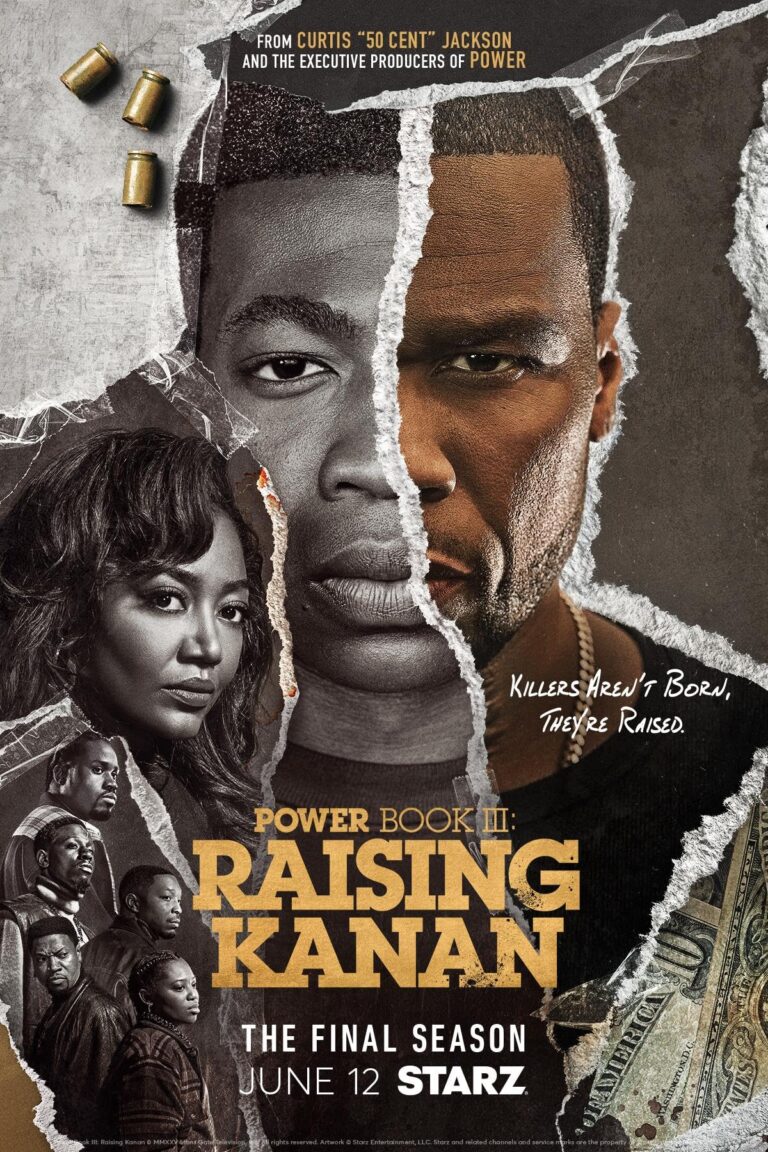
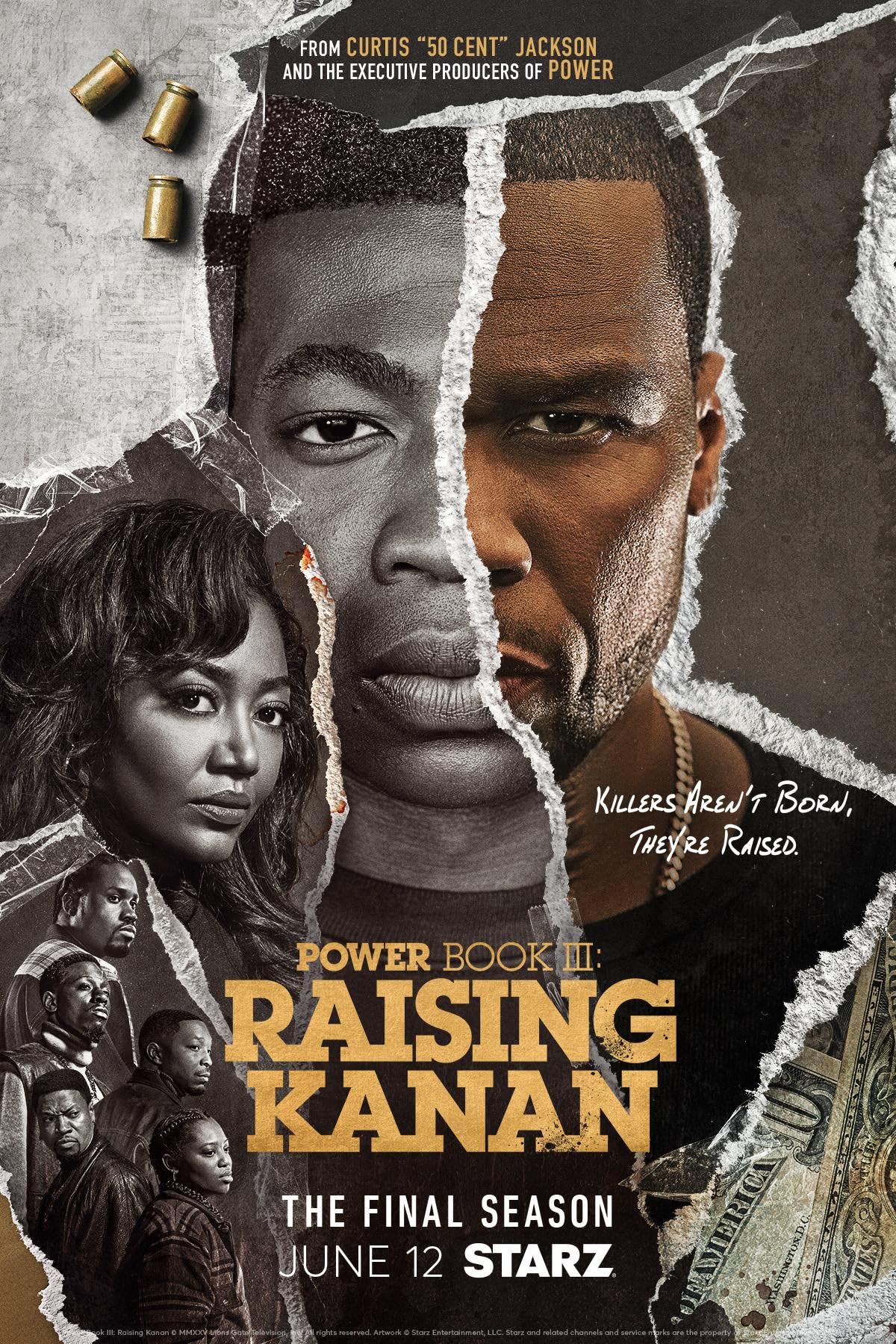
Set in the 1990s, the series chronicles the early years of Kanan Stark (Mekai Curtis) from the Power franchise. The original Power series, set in the 2010s, introduced Kanan as a hardened, terrifying villain. He mentors—and later goes to war with—the main character, James “Ghost” St. Patrick. Raising Kanan explores his origin story and the neighborhood that shaped him. Executive producer and actor Curtis “50 Cent” Jackson, who inspired much of Kanan’s character and life, also comes from South Jamaica.
It’s “Everybody Hates Chris” for Psychopaths so Broken That it’s Somehow Wholesome TV for Them
You know how “Pumped Up Kicks” by Foster the People has that upbeat, sunny indie-pop sound? Yet, if you listen closely, the lyrics tell the story of Robert, an isolated and unstable teenager planning a school shooting. Mark Foster, the frontman, explained that he wrote the song to explore youth mental illness and raise awareness about gun violence. Similarly, both Raising Kanan’s theme song by 50 Cent, “Part of the Game,” and the show itself present dark realities beneath their catchy, nostalgic music and 1990s visuals.
Sascha Penn, the show’s creator, often described it as a family drama wrapped in a crime procedural. Raquel “Raq” Thomas, played by Patina Miller, is Kanan’s mother and the family’s matriarch. She’s the show’s heartbeat. Penn wanted to examine how a mother’s fierce, unconditional, yet toxic love can corrupt a child—even when she means to protect him.
Raq is her brother Marvin’s (London Brown) little big sister and Lou-Lou’s (Malcolm M. Mays) actual older sibling. Together, they form one of South Jamaica’s most formidable and feared crime families. Marvin’s daughter, LaVerne “Jukebox” Thomas—played by Hailey Kilgore—is Kanan’s older cousin. In the original Power series, viewers meet her as a villain even more vicious than Kanan. In this series, the writers intentionally keep her in the background to highlight those origins. Jukebox is a fiercely independent queer teenager with a beautiful singing voice. Like Kanan, she struggles between her dreams for a better life and the inevitable inheritance of the family’s legacy.
“Art Imitates Life” – Aristotle
In Raising Kanan, the core thesis argues this: monsters aren’t born; instead, they’re built by the people who love them most. Despite a teenager’s desire for independence, the parents’ sins and business choices inevitably become the children’s burdens. Moreover, Sascha Penn, original Power franchise creator Courtney A. Kemp, and 50 Cent subvert the standard “hood show” crime drama tropes. Rather than relying on flashy 1990s nostalgia, they ground Raising Kanan in the emotional reality of Shakespearean family dynamics. Ultimately, their goal was to create characters who resonate deeply, even with audiences who have never experienced this environment.
The saying traces back to the Greek philosopher, who argued in Poetics that poetry and theater mimic human actions to help people process emotions. As a Southside Jamaica, Queens native, I’ve seen a lot of shit. On the other hand, if the cops ask me, I ain’t see shit. To sum things up, that’s real-life South “Sucide” Queens philosophy. In case you didn’t know, the neighborhood was ground zero for those aforementioned drug and crime epidemics. That’s why this mindset is a consistent theme in all five of 50 Cent’s studio albums; he’s irrevocably shaped by it. If you’re from South Jamaica, you’re seriously wired differently than the rest of New York City.
The show leverages 50 Cent’s mature, real-world persona to provide an omniscient, reflective lens that reframes teenage Kanan’s impulsive actions as the inevitable tragic blueprints of his future criminal self. It’s “what if” scenarios that Curtis “50 Cent” Jackson plays over and over in his head. In real life, Jackson’s mother lost her life in “the game” when he was 8 years old. Imagine growing up hearing these stories, feeling like you have to live up to these legends. Kanan’s story reflects real-life 50 Cent’s personal confessions. It’s like five seasons of talk therapy for him about the loss of his innocence and the destruction of his family.
Goodfellas Comes to Southside Queens
Power Book III: Raising Kanan delivers a gripping origin story of Kanan Stark as he navigates the dangerous world shaped by his ruthless mother, Raq, and uncles Lou and Marvin. Instead of relying on action, the series builds suspense through slow-burn, psychological tension, exploring this philosophy.
Kemp and 50 Cent explicitly told Penn that they wanted to capture the seductive, vibrant energy of 1990s South Jamaica, Queens, while showing the stark, devastating consequences that follow (my wordplay is crazy). They pitched this idea with Martin Scorsese’s style of his characters narrating in mind. There’s also a host of prominent Italian-American actors who play members of the Italian mob in Raising Kanan. Tony Danza is mafia boss Stefano Marchetti, Michael Rispoli plays Newark mob boss Sal Boselli, Joe Pantoliano plays Manhattan crime family boss Pino Bernardi, and Joseph D’Onofrio plays Carmine.
Joey Bada$$ stars as Kadeem “Unique” Mathis, who those of us from the Southside can’t help but view as loosely inspired by Kenneth “Supreme” McGriff. In real-life, his Supreme Team controlled the Baisley Park Houses. The Oscar-winning rapper turned actor noted that he distinguised his character Unique from Supreme by giving him classic cinematic crime figure influences.
But to add, also in real life, Lorenzo “Fat Cat” Nichols dominated 150th Street and Sutphin Boulevard. All of which play a significant role in “Raising Kanan” (that wordplay, man). Antonio Ortiz plays Kanan’s loyal friend and rapper Shawn “Famous” Figueroa. He’s not about that life, but Southside will make you about that life. It’s dangerous to be a rapper from South Jamaica—on the show and in real life.
Goodfellas and Casino Are So Good Because They’re Based on Actual Events and People
Martin Scorsese used real-life mobsters as technical advisors for his movies. Penn shared that some storylines, including the series finale’s pivotal conversation between Kanan and Raq, were from 50 Cent’s real-life introspections. Mekai Curtis brings chilling realness to this synthesis of art and real life that forms the character Kanan. Raising Kanan uses 24 different directors across its 48-episode, five-season run. There are well over 100 vintage rap, R&B, pop, and soul tracks interspersed throughout. The show’s vintage cinematography and period-accurate sound design capture the grit of 1990s New York.
However, one reason the show feels so real is that I can spot the real events and figures that inspired them. There’s no doubt in my mind that 50 Cent himself is the Power Universe’s top technical advisor about Southside. Before I moved out of state to the Midwest, I was born on 164th Street. My great-grandfather’s kids, including my granddad, all had about 10 kids, who went on to have about dozens of grand-to-great-grandchildren each, all from or around the corner from South Jamaica Houses where my nana and granddad lived, also known as “40 Projects.”
When my mom divorced my dad, I’d spend half the year back here in New York with family. I can see the house he rented a basement apartment shown in the background of Raising Kanan’s very first episode. The opening scene, actually. Raq takes Kanan back to the iconic Courts at Baisley Park to fight his bullies. My aunt’s rented house was in that same scene, directly across the street. The Courts are also featured in a scene from Belly. A federal agent named Roger intercepts Tommy “Buns” Bundy (played by DMX).
(Sidenote: The late actor who plays Roger is Frank Vincent. He was in Scorsese’s Goodfellas and Casino. Also, Nas’s music video for “Street Dreams.”)
The Verdict
Power Book III: Raising Kanan shows that world with haunting, marrow-level accuracy. When you see Raq give Lou the 40 Projects with Marvin as the enforcer close by in the Baisley Houses, those of us from Southside recall the real-life Corley Brothers, most notably James “Wall” Corley. Want to know what law enforcement called James? “Ghost.” Big rich towwwwwn. I’m a Black nerd into all types of cool sh*t who lives a wholesome life, I ain’t seen shit. We’re talking technical advising of a hit network television series, right now. That’s it.
In all seriousness, the final seasons introduce legendary Power lore figures like Breeze (Shameik Moore). Breeze is the man who teaches Kanan the ultimate street game, who in turn passes those lessons down to a young Ghost and Tommy Egan. They all make an appearance in Raising Kanan. Bottom line, it’s a must-watch recommendation for hardcore genre fans, crime drama enthusiasts, and anyone invested in the Power universe. As a prequel, it easily stands alongside—and in many ways surpasses—its predecessor, making it a must-see series.