From Overstock Liquidation to Hollywood Blockbuster: Project Hail Mary’s Meteoric Rise
Due to a massive initial printing, hardcovers of Andy Weir’s Project Hail Mary eventually flooded discount stores like Dollar Tree. However, this commercial overstock was never a failure of storytelling quality. Instead, the book was simply waiting for a studio with the right vision to unlock its blockbuster potential.
Thankfully, Amazon MGM Studios possessed that exact budget and ambition. They beautifully unleashed the narrative onto the big screen. Directed by Phil Lord and Christopher Miller, this stunning adaptation masterfully transforms literary text into a visually spectacular space epic.
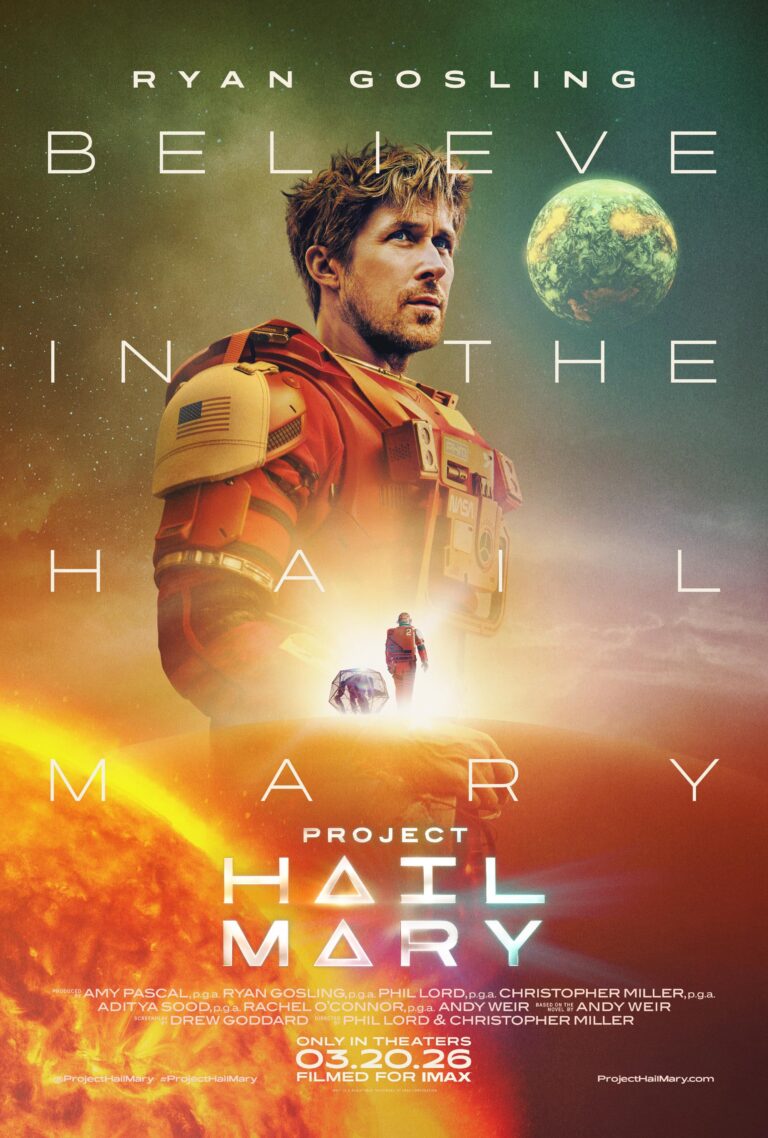
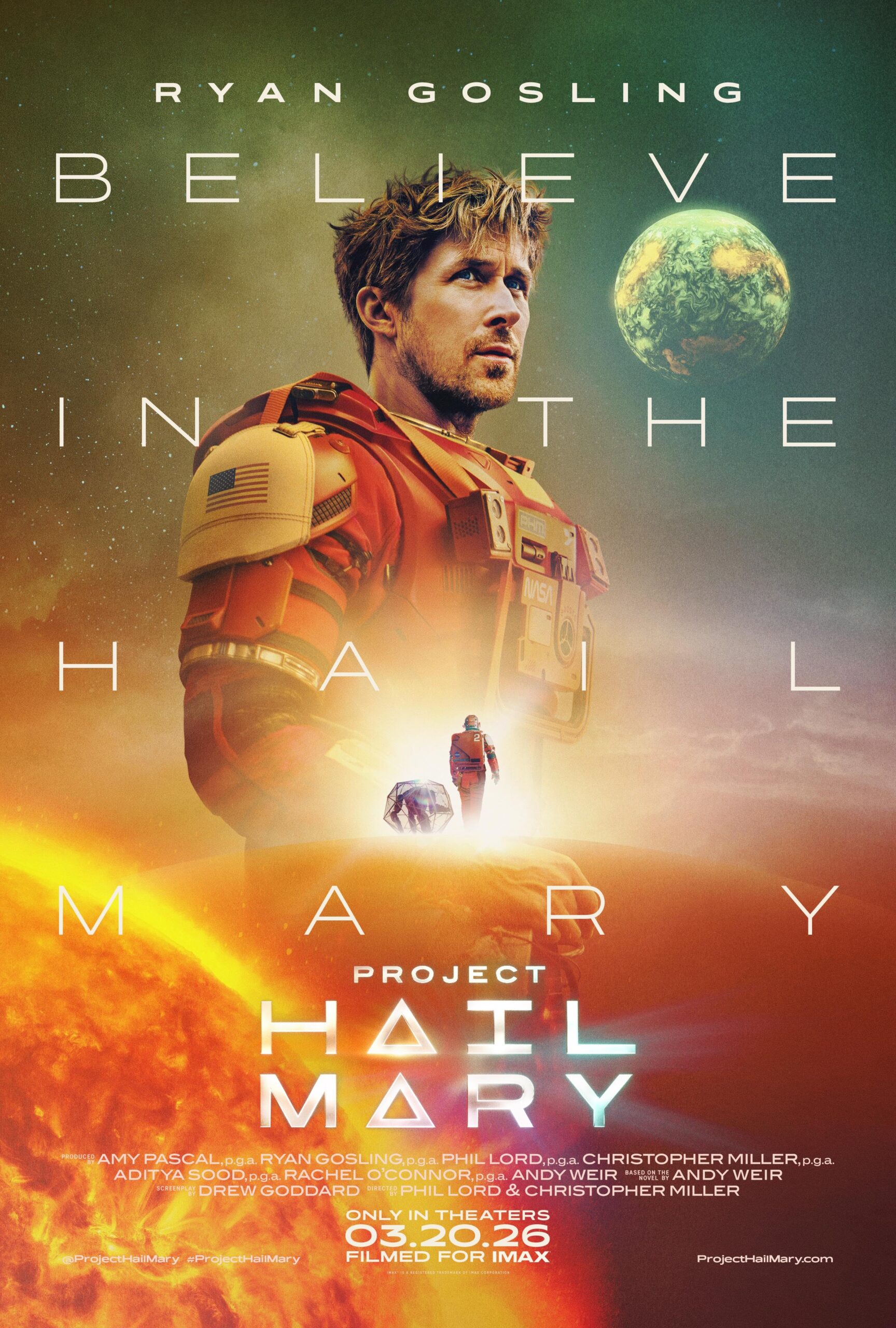
Furthermore, Ryan Gosling leads the cast as disgraced, counted-out scientist turned schoolteacher Ryland Grace. His emotionally resonant performance helps anchor an adventure that easily stands among the absolute best book-to-screen translations of the decade.
Book vs. Movie: The Age-Old Debate Gets an Interstellar Twist
For over a century, audiences leave the theatre often wondering this one question: Is the movie better than the book? And for a second time, Oscar-nominated writer, showrunner, and filmmaker Drew Goddard adapted a Weir novel for the big screen. In Project Hail Mary (2026), Grace wakes up alone on a spacecraft, light years from Earth. He has no memory of who he is or why he’s there. Gradually, as his past slowly returns, he remembers his mission: find out why the sun is dying and try to save humanity. Ultimately, in the loneliness of space, an unexpected friendship changes everything.
Staying True: How Faithful Is Project Hail Mary to Andy Weir’s Vision?
The film is deeply faithful to Andy Weir’s novel and keeps the main story intact. Ryland Grace, played by Ryan Gosling, wakes up with amnesia on a ship far from Earth. As his memories return, he realizes he must save the sun—and humanity. Meanwhile, along the way, he forms an unlikely friendship with Rocky, a rock-shaped alien engineer.
Cinematic Streamlining: The Key Changes from Page to Screen
However, screenwriter Drew Goddard and directors Phil Lord and Christopher Miller make some key changes. They remove the genetic requirement for surviving a coma. Similarly, as with The Martian adaptation, Goddard also trims Weir’s signature, complex hard-science details, such as the Taumoeba breeding process. In addition, Eva Stratt (Sandra Hüller)—who recruits Grace to save the world—is far less ruthless than in the book. Finally, the technically cannibalistic “me-burger” subplot is also gone.
Heart Over Hard Science: Why These Adaptation Choices Matter
These changes streamline a long, detailed hard science fiction novel into a focused feature film. Most importantly, they let the story focus on what matters most: the deep bond and sacrifice between Grace and Rocky. By skipping some technical details, the movie chooses heart over strict accuracy.
Smarter Together: How Project Hail Mary Redefines the Alien Ally as Boundless
The novel emphasizes Rocky’s superior intellect, pressing Grace—and us—to confront humility in the presence of true difference. Onscreen, however, this dynamic is gentler; Rocky and Grace are portrayed as near equals, sharing insights and solving problems together. While this choice makes their friendship more accessible onscreen, it also sacrifices a few chances to show how grace under humility can be just as heroic as courage under fire. It would have been remarkable to see curiosity and vulnerability celebrated as survival traits.
Cinematic Easter Eggs: A Love Letter to Sci-Fi and Beyond
Nevertheless, the film explicitly features homages that span literature, space exploration history, and legendary cinema. There’s a Close Encounters of the Third Kind moment. Interstellar, too. Of course, 2001: A Space Odyssey. But you’ll also spot nods to Alien, Superman, Contact—even When Harry Met Sally and The Three Stooges. These references, in many ways, compensate for those missed opportunities by anchoring the film in a rich tradition of cinematic storytelling. If you’re serious about film, you’ll spot them and appreciate Gosling’s ability to make us realize through these moments that we’re all a lot like Grace—human, and doing our best.
Daniel Pemberton’s Sonic Genius: Turning Silence into Symphony
Daniel Pemberton—already legendary for Spider-Man: Into the Spider-Verse and its kaleidoscopic sequel—brings his genius to Project Hail Mary (2026). But Pemberton’s score doesn’t just trail behind Ryland Grace’s odyssey; it transforms the chilling silence of space into a symphonic, pulse-quickening testament to human and alien will. His music does what the film does best: it forges cold, hard astrophysics into something that beats with life. Book purists might initially grieve the absence of Andy Weir’s dense lab math, but Phil Lord, Christopher Miller, and Drew Goddard have engineered something rarer than accurate equations—a blockbuster with a soul.
A Blockbuster That Chooses Heart Over Hard Science
By choosing emotion over technical rigidity, Project Hail Mary takes a solitary survival puzzle and explodes it into a sweeping story of universal empathy. The cosmos here isn’t a void to fear, but a vast canvas where true connection can bridge even the wildest biological chasms. This film is a blazing reminder: survival isn’t just a math problem—it’s a collaborative art.
From Dollar Tree to the Cosmos: A Modern Sci-Fi Masterpiece
Years from now, when sci-fi fans look back on this cinematic era, they won’t just recall the journey from Dollar Tree remainder bins to the Hollywood spotlight. They’ll remember the quiet courage of a disgraced teacher and a rock-shaped engineer, showing us that we’re always smarter—and stronger—together. Project Hail Mary is an unmissable masterclass in filmmaking: it leaves you breathless, moved, and staring up at the stars with hope rekindled.