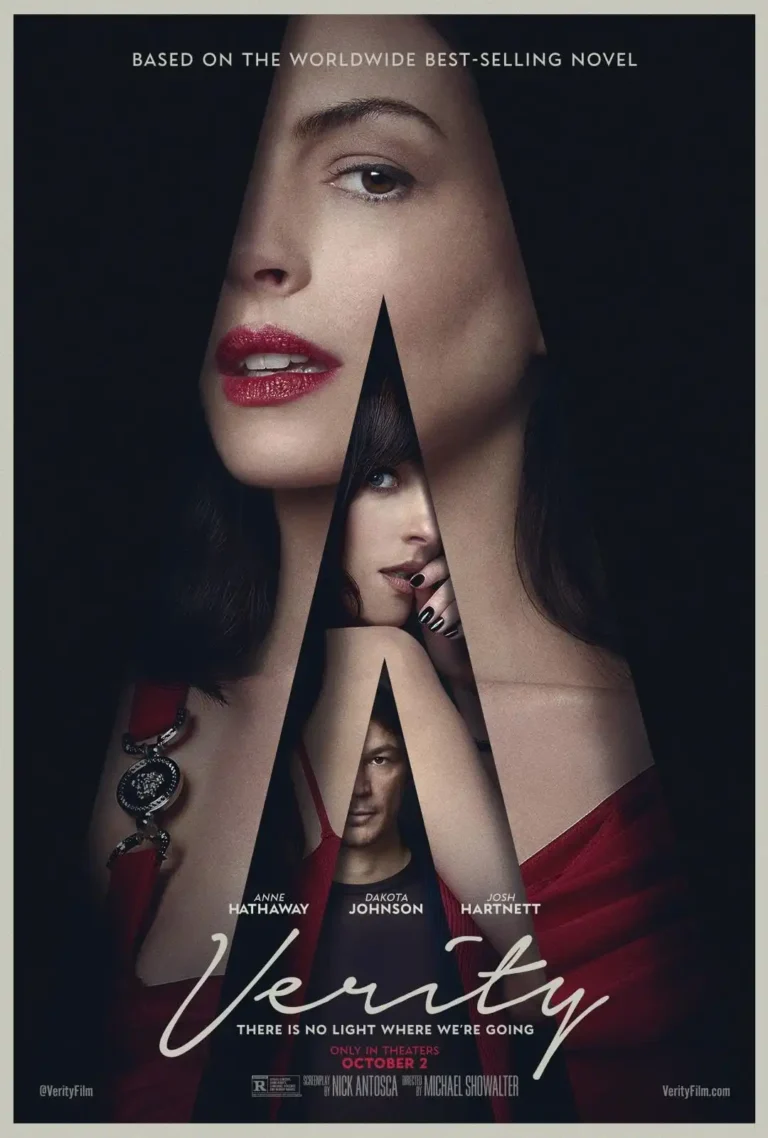
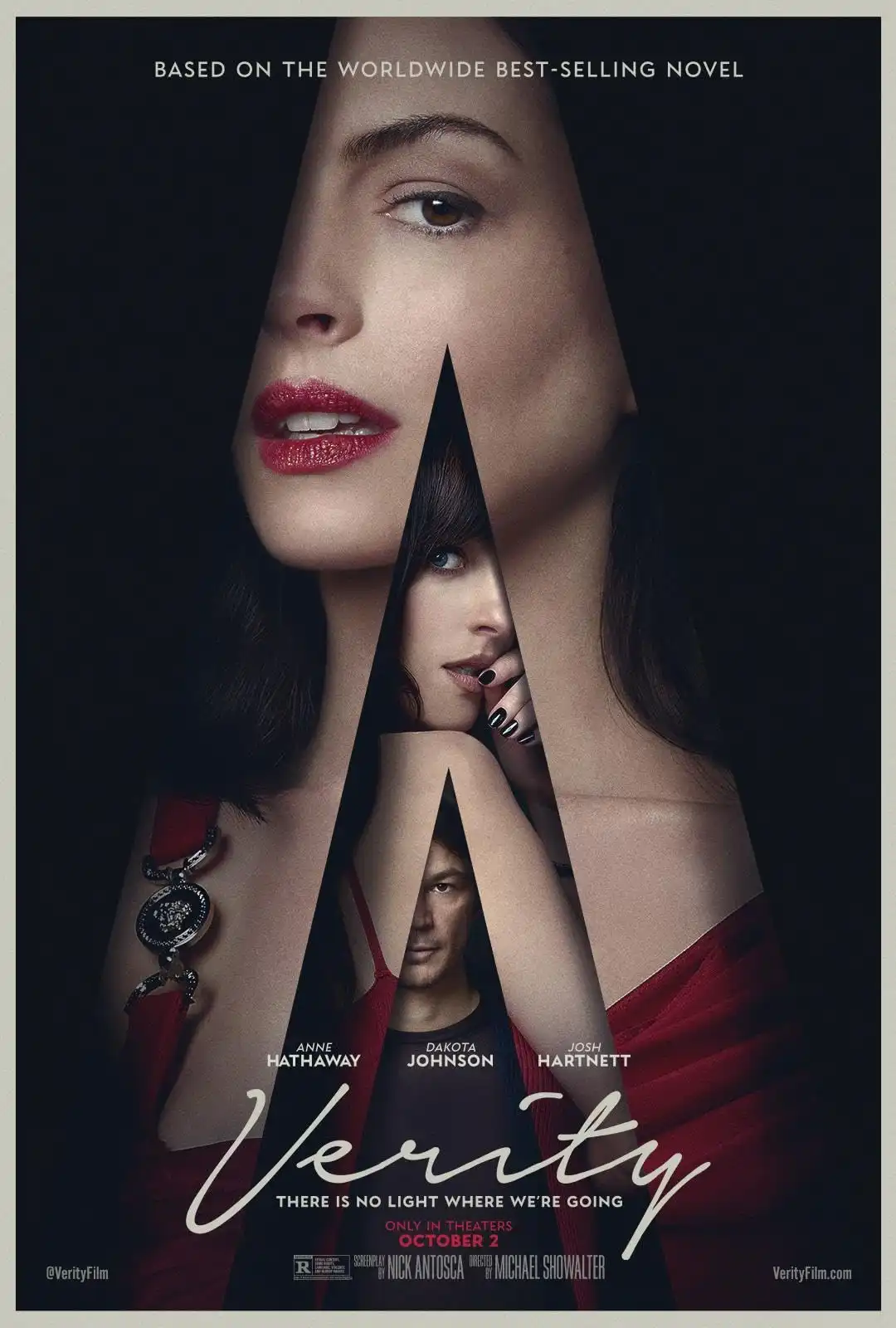
Michael Showalter’s Movie and Colleen Hoover’s Pulpy, Voyeuristic, Psycho-sexual Soap Opera Are for Writers—and Readers Who Love Writers.
If you’ve read Colleen Hoover’s Verity and liked it, then you’ll enjoy this movie. It’s like the book but for the big screen. One thing you should know: if you ever wondered what’s inside a writer’s mind, you’ll see things you wish you could unsee. Our methods and rituals, the creative process behind artistic brilliance, jar the uninitiated, and I’m not even joking. And if you’re a writer, you already know where our minds go when we wonder about other writers.
In Verity (2026), Dakota Johnson, who plays undiscovered writer Lowen Ashleigh, makes Hoover’s neurotic Chapter 4 her very own. Ashleigh wrestles with intense self-doubt and anxiety after she takes on the massive, bestselling book series for Verity Crawford.
Anne Hathaway starred in two book adaptations this year: Homer’s The Odyssey and Verity. If we count The Devil Wears Prada 2, that means two films where she plays a writer. In Verity, she brings just enough campy theatricality to make her performance a joy to watch. She leans into the over-the-top, “knowing trashiness” of a psychological thriller villain, delivering every twisted look and manuscript revelation with gratifyingly heightened dramatic flair.
If You Haven’t Read the Book, It’s Fine. The Movie Is Still a Fun Watch.
The plot is straightforward: Lowen Ashleigh thinks, after a paralyzing accident, bestselling author Verity Crawford chose her to ghostwrite her next three books. While working, Lowen finds a flash drive with what seem to be Verity’s secret autobiographical notes. As she digs deeper, Lowen falls into a dangerous conspiracy that could turn deadly.
I read Caroline Kepnes and Lauren Weisberger. People often wrongly exclude me from conversations because I don’t fit the expected target demographic. I’m a 6’9″, athletic-built, straight Black man. I’m just into all types of cool sh*t. I tell you this because you’re gonna hear, “You have to read the book first.” No. You don’t. I also read Jeffery Deaver; Verity feels like You and The Devil Wears Prada, if Deaver wrote it for a “steamy” Lifetime movie—with no Lincoln Rhyme anywhere to make it make sense for us. But for this demographic, this is how they escape. For me, I get voyeuristic enjoyment from knowing this is the kind of fuckery this demographic escapes in.
Verity Shows How a Writer’s Mind Actually Works. It’s About as Accurate as It Gets.
With Verity’s notes, Lowen no longer wonders about the writer she always compared herself to. She reads a play-by-play in notes of everything Verity has thought her entire career. Like the first night Verity had sex with the guy who later became her husband, Jeremy Crawford, played by Josh Hartnett. Lowen gets to intimately read what that meant to Verity.
Or how Verity narrates, “An autobiography encouraging the reader to like the author is not a true autobiography,” as Lowen envisions it. “No one is likeable from the inside out. One should only walk away from an autobiography with, at best, an uncomfortable distaste for its author.” Lowen doesn’t see the real-life, post-accident, catatonic Verity. She imagines the confident, intimidating Verity she sees on TV in the room speaking to her.
“A writer should never have the audacity to write about themselves unless they’re willing to separate every layer of protection between their soul and their book.” To me, lines like this are all types of cool sh*t. “The words should come directly from the center of the gut, tearing through flesh and bone as they break free.”
Lowen absorbs everything her imagined version of Verity says to her from across the room. To her, it’s the answer to her wondered questions, pushed to the max where she’s certain all of it is the truth. She believes this is what makes Verity’s villains in her books so superb. But then, you start to wonder—meta-literarily: Do the horrifying things Verity writes reflect her true soul, or do they just show the dark, toxic byproduct of a brilliant creative process?
Does Verity excel at her job as a writer? Does she craft a narrative that forces the reader to feel exactly what she wants them to feel? Or does Verity push this to a terrifying extreme? Does she use her writing talent to gaslight, manipulate, and control people in her real life, turning her own household into a living plotline? You’re invested in a pulpy, voyeuristic, psycho-sexual soap opera.
The Verdict
Verity delivers pure, unapologetic raunch—and that’s exactly why it works. It leans entirely into its pulpy, late-night Lifetime movie energy, serving a deliciously cheesy psychological thriller that you can’t stop watching once you dive in.
Hartnett embodies the ultimate archetypal romance-novel, wish-fulfillment caricature with reverence. The kind of guy this target demographic want in their books. He stands as the hyper-perfect husband tailored specifically for reader fantasy, emotionally wounded and always whisking himself away on convenient business trips just to keep the plot moving.
When the movie doesn’t play up this domestic fantasy, it plunges headfirst into over-the-top, 50 Shades of Grey–style melodrama. The sex scenes directly target the plain vanilla female gaze, draping everything in sensual lighting, sweeping music, and a heavy dose of soap-opera overdramatics. The film indulges shamelessly, trading nuanced realism for high-octane passion and sensationalized relationship drama.
I also grew up on Skinemax, so this exact lack of restraint makes the film so wildly entertaining—fuckery. By embracing its campy, guilty-pleasure identity, Verity transforms a deeply dark premise into a highly watchable, literary spectacle. If you go in expecting a highbrow psychological masterpiece, you’ll feel disappointed. But if you watch it for the playfully raunchy, addictive, over-the-top meta-literary rollercoaster that it is, you’ll find it absolutely worth the watch.