Can a Classic Monster Be Reimagined for Modern Audiences?
America’s first mummy movie was The Mummy, released in 1932 by Universal Pictures. Directed by Karl Freund, the film features Boris Karloff as Imhotep, an ancient Egyptian priest who is accidentally brought back to life when archaeologists open his tomb. Lee Cronin’s The Mummy (2026) takes a different approach. Unlike recent versions starring Brendan Fraser or Tom Cruise, the new film does not focus on intrepid explorers awakening ancient curses. Instead, Cronin’s version digs up a fresh take on mummy horror, but its story remains as baffling as ancient hieroglyphics.
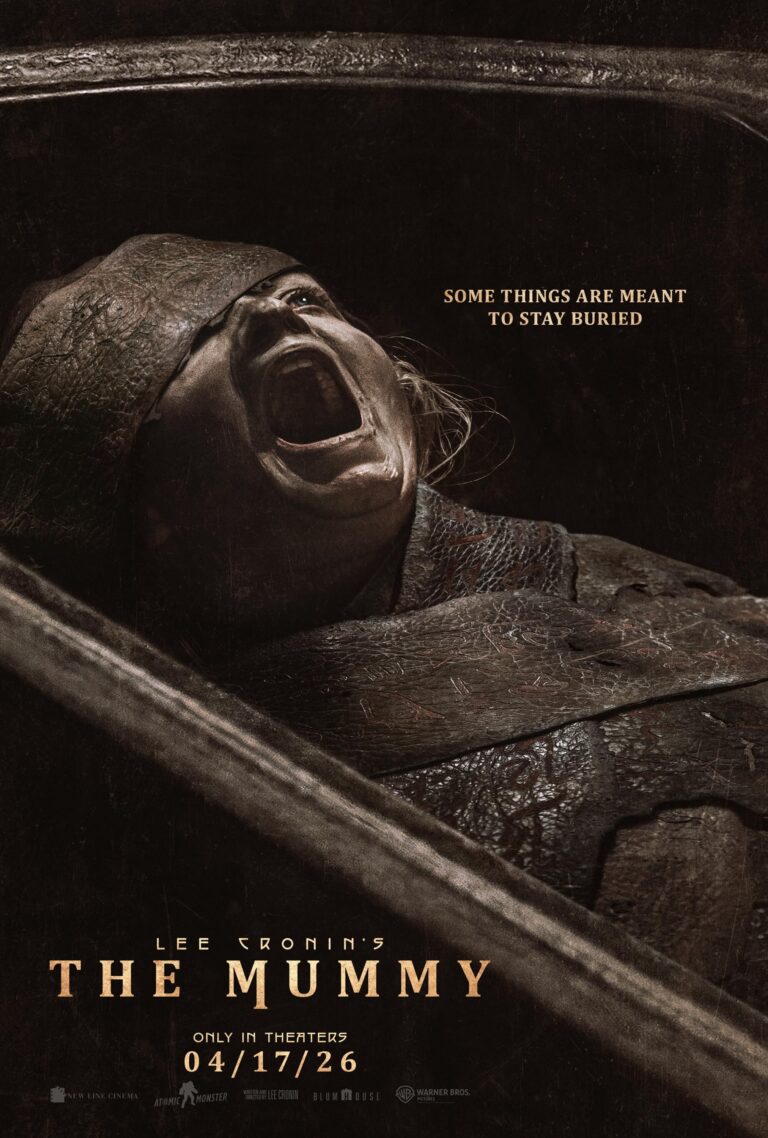
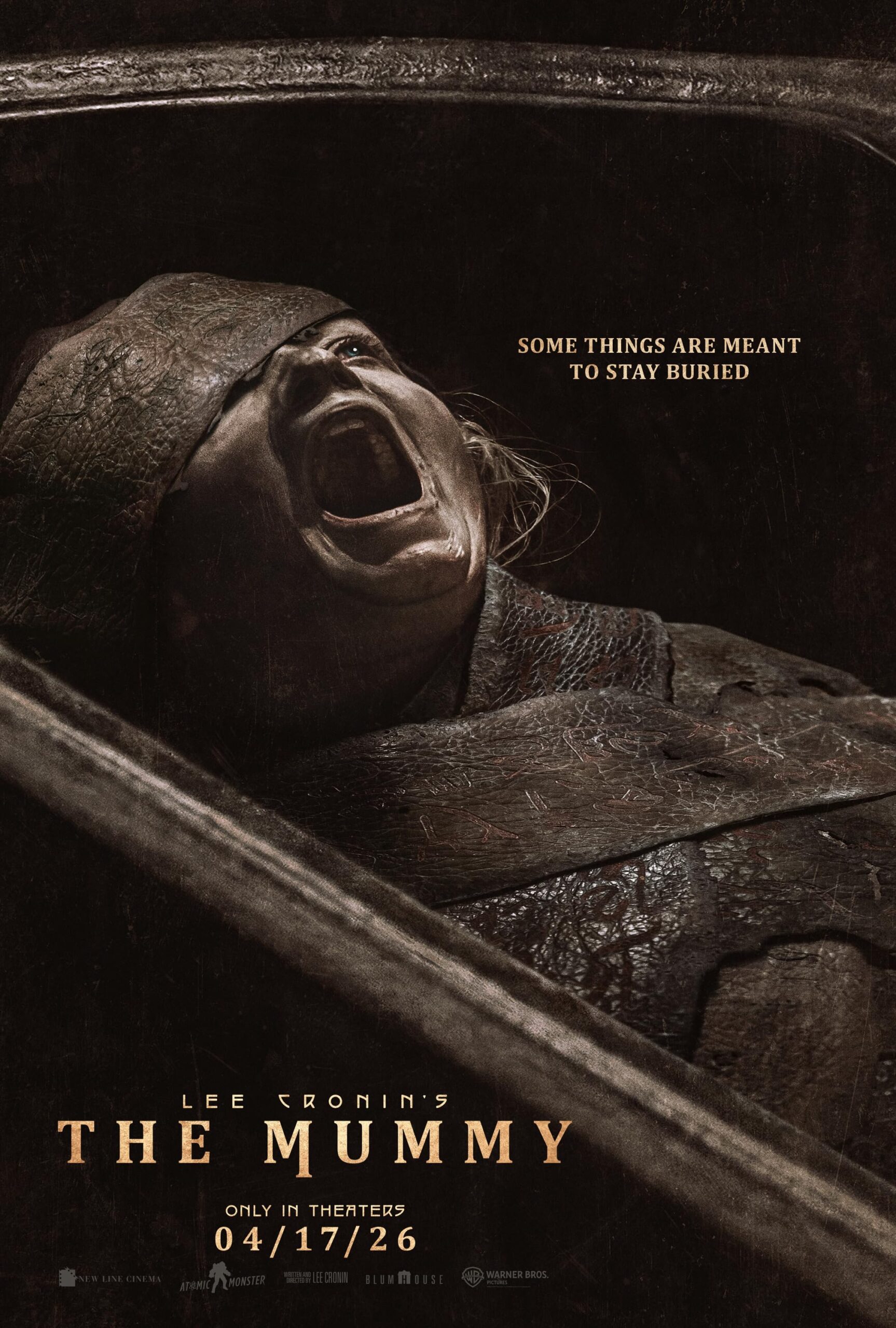
Irish filmmaker Lee Cronin, known for horror films like The Hole in the Ground and Evil Dead Rise, subverts parental fears with his signature brutal, confined body horror. That’s the approach this mummy movie takes. Eight years after Katie (Emily Mitchell) mysteriously disappears in Egypt, she returns severely traumatized to her devastated family in New Mexico—but something is not quite right. As her family races to uncover the truth, Katie begins to tear them apart—both figuratively and literally.
Unlike the Evil Dead franchise, which establishes clear internal logic and supernatural rules for its demons—the Deadites—Lee Cronin’s The Mummy never does. In Cronin’s Evil Dead Rise, the relentless demonic brutality feels like a natural consequence of the film’s established world. In contrast, his Mummy frustrates viewers, not by engaging their interest, but by repeatedly presenting itself as intriguing while failing to deliver. As a result, you keep watching not out of curiosity, but in an attempt to pinpoint why the film feels so oppressively disappointing.
Cronin’s Hieroglyphics
By the same token, the film tries to explain its plot logically but never succeeds. This failure hurts the pacing and slows the story. The result is a near-incomprehensible, 134-minute “scary movie” that is not traditionally frightening. Instead, it relies on body horror, gross-out practical effects, and disturbing physical decay. What Cronin usually conveys through twisted, dark, and ambiguous imagery becomes pigeonholed by forced logic and procedural explanations. The film’s graphic visuals—like peeling skin, torn fingernails, and severe physical rot—are explained poorly through unnecessary dialogue. Ultimately, the film chooses shock value over deep psychological suspense.
Parental Blindness: When Denial Becomes Monstrous, The True Source of Terror
What Cronin tries to extract horror from is the parents’ absolute denial. Jack Reynor’s performance as Charlie rivals his portrayal of Christian in 2019’s Midsommar. He emotes the unassuming victim with few words. In Lee Cronin’s The Mummy, Charlie is a father whose professional life as a journalist depends on uncovering objective truth. Yet he watches his daughter Katie twist and contort into impossible, bone-popping angles, dismissing it as a severe neurological reaction to her eight-year disappearance. The real terror comes from watching him desperately try to build a life on justifying these fragile contradictions.
Opposite Charlie is his wife, Larissa (played by Laia Costa), whose hyper-protective motherhood borders on the fanatical. She cleans away the mummy wrappings that have fused to Katie’s body and hides the blood-soaked linens. Like Charlie, she willingly ignores the strange inscriptions on the wrappings that are causing Katie’s flesh to rot, all to preserve the illusion that her broken family is finally whole again.
Meanwhile—back in Egypt—Detective Dalia Zaki (played by May Calamawy) never stops investigating Katie’s case. Her character brings much-needed pragmatism, providing a sharp contrast to the family’s unraveling sanity. Through Zaki’s scenes, the film reveals an ancient, multi-generational ritual designed to contain a parasitic demon within a host body—Katie. Zaki’s presence grounds the narrative and prevents the story from collapsing entirely under the weight of its grim focus on the family’s suffering.
Unhinged Surrealism: Cronin’s Darkest Strength
However, whenever the film returns stateside to the family’s home in New Mexico, the atmosphere immediately becomes oppressive again. Cronin illustrates how trauma can completely blind people. This blindness reaches an absurd point after Katie terrorizes her brother, sister, and grandmother. The deviled eggs scene—in fact, the entire sequence—showcases Cronin’s greatest strengths as a writer and director: unhinged surrealism. His characters grow so desperate to fix past mistakes that they willingly ignore their own impending doom until it is far too late.
But the film’s attempt to equate the Egyptian desert with the New Mexico desert by forcing visual similarities doesn’t work. The dust storm, supposedly caused by the entity’s growing power, also feels contrived. These small, unexplained details become maddening subtleties that are never fully addressed on screen. The problem is that these choices come at the viewer’s expense. There’s no types of cool sh*t to discover for investing into this film.
The Verdict
Lee Cronin’s The Mummy (2026) is undoubtedly a subjective entry in modern horror. Audiences looking for the action-adventure of Brendan Fraser or Tom Cruise instead find themselves facing a grim, uncompromising film. It feels closer to The Exorcist or Hereditary. The script handles its exposition unevenly at times, occasionally cutting to scenes in Eygpt that slows Cronin’s strengths showcased inside the family’s house. Attempts to draw visual parallels between the Egyptian desert and the New Mexico landscape, along with unexplained phenomena like the approaching dust storm, add atmospheric intrigue but can feel forced or distracting. Additionally, the film’s focus on Katie and her siblings without building their characters more makes for an exhausting viewing experience. It feels unrewarding.
Cronin has raided the tombs of a classic monster from decades of campy movie history, reimagining it as an intimate and unsettling exploration of human loss. The Mummy challenges its audience with a devastatingly simple question: From Ancient Egypt to New Mexico, if a family is already hollowed out by grief, how much of them is left for a monster to consume? Yet, despite its ambition, Lee Cronin’s The Mummy (2026) struggles to become a work of modern horror that viewers will want to rewatch or remember. It aims to be an unflinching look into the shadows of domestic life, hoping to linger long after the final frame fades to black. Instead, its impact is buried like gold and treasure deep in a pyramid’s tomb—hidden behind almost indecipherable hieroglyphics. But why?