Despite Lionsgate distributing it, The Gates (2026) is an indie film. I like indies. In the mid-1990s and early 2000s, we millennials discovered them late at night on HBO, Showtime, or Cinemax. Notable examples include Larry Clark’s Kids, written by then-19-year-old Harmony Korine, who later went on to direct Gummo. The late Roger Ebert remarked that Korine’s work as a 25-year-old director deserved mention alongside auteurs like Godard and Cassavetes. James Lee Toback’s all-star, Wu-Tang–infused indie classic, Black and White, was another standout. Ebert gave the film three out of four stars; Toback’s uncompromised, artist-driven moviemaking let the cast create the script through improvisation.
The Gates (2026) is an Uniquely Awesome, Socially Conscious Indie Thriller
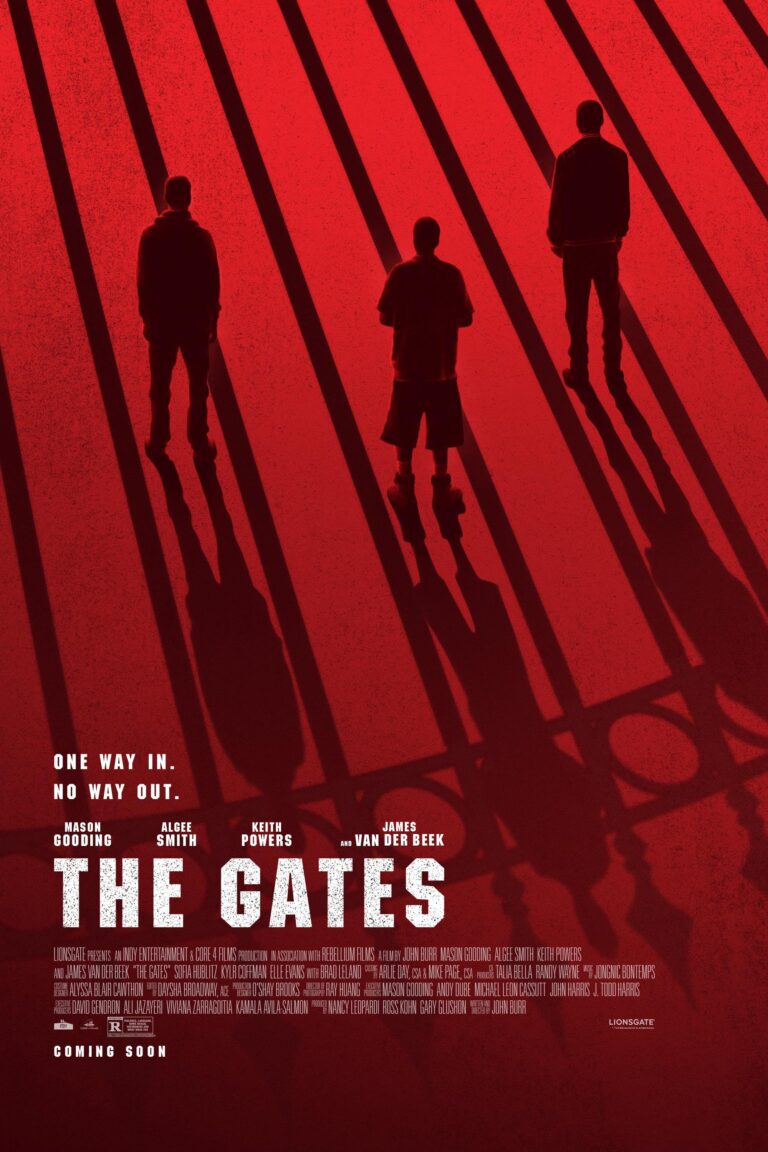
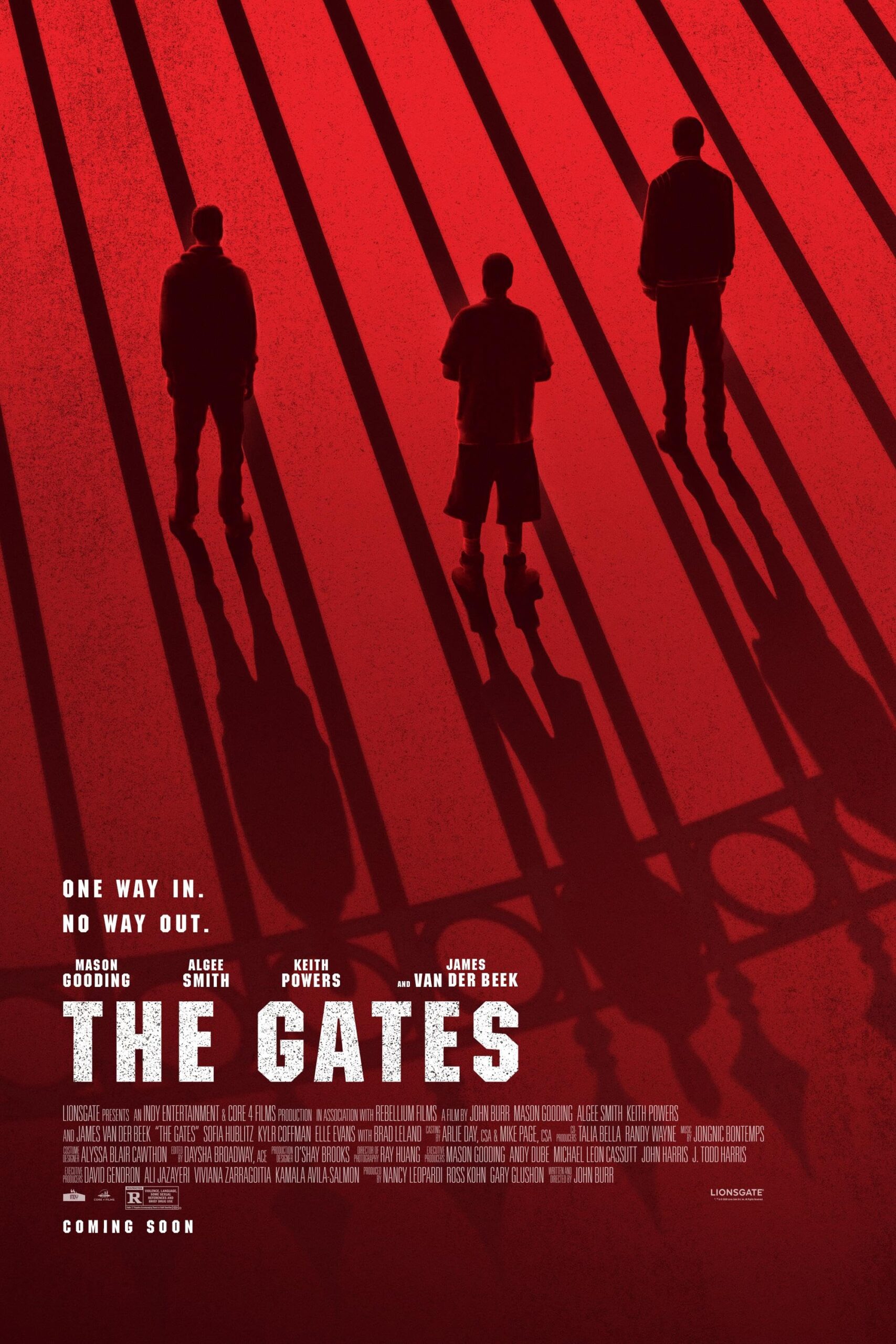
Requiem for a Dream. Diary of a Sex Addict. Bully. Thirteen. Bernardo Bertolucci’s The Dreamers. Additionally, The Gates has this kind of effect. It’s a low-budget psychological thriller starring Mason Gooding, Algee Smith, and Keith Powers as three Black friends who make a wrong turn and find themselves trapped inside a remote Texas subdivision’s gated community. What’s more, they’re hunted by its patriarch—a pastor—after witnessing him murder a woman. As the residents pursue the trio, their friendship begins to fracture under the pressure of their differing worldviews on Blackness, community, and survival.
The Inspiration for the Movie is its Writer and Director John Burr’s Life
Although born in Boston, Massachusetts, in 1980, John Burr grew up in Texas. He shared with the horror entertainment site Daily Dead that The Gates is about his experiences as a Black-identifying, multiracial kid growing up in Texas in the 1990s.
The film opens with a climactic decision faced by its bloodied and gun-drawn main character, Derek, portrayed by Mason Gooding—the real-life son of Oscar-winning actor Cuba Gooding Jr. We’re then flashed back eight hours prior to the terror, where Derek, an aspiring law student, is studying for the LSAT. His childhood friend Tyon (Keith Powers) unexpectedly calls to pick him up at his affluent Texas neighborhood for the night of his life. Because of his upbringing, Derek initially places his trust in external authority and the judicial system.
As he gets in the car, Derek sees Tyon’s friend Kevin (Algee Smith). Within seconds of the trio leaving Derek’s neighborhood, he correctly predicts that the local cop will pull them over. Unlike Derek and Tyon, Kevin is keenly aware of the harsh societal realities and racial profiling facing young Black men.
Tyon, written as the group’s college star athlete who’s currently injured, seems to navigate between these two polar opposites. His MCL injury serves as a major plot hurdle—a Black athlete whose only armor is physical talent cannot run or defend himself easily. He must now rely on his “team,” who aren’t getting along. Despite its heavy-handedness at times, The Gates is an indie film willing to explore these complex themes intimately.
Burr’s ultimate message behind The Gates is to expose how performative religion, systemic racism, and weaponized privilege function in modern society through the trio’s eyes. In this cat-and-mouse game, we see the challenge that everything isn’t always so black and white.
It’s the Last On-screen Performance of the Late James Van Der Beek
Despite being much like the character Kevin on the outside, I was a millennial into all types of cool sh*t—Dawson’s Creek was great. The show follows aspiring filmmaker Dawson Leery, played by James Van Der Beek. Did you know Tom Kapinos, its creator, later made Californication, and even had the two shows share a universe? One is a teen drama; the other, a raunchy, late-night dramedy on Showtime. But underneath, both shows are about a guy trying to overcome dysfunction and fracture. It was James Van Der Beek bringing Kapinos’s guy to life that made both shows possible. He does it for the very last time as the community’s murderous pastor in The Gates (2026).
Many misjudge indies and their cast and crew as people who have no other choice for work. They’re wrong. These people actively choose these movies and shows; it’s where they’re comfortable giving everything they have. That’s Van Der Beek, especially in The Gates. He makes Jacob scary—not in a menacing way, but in how easily Jacob weaponizes white neutrality. Van Der Beek’s facial expressions show the gears turning, letting the audience read the unsaid—the expectations of an upstanding suburban community leader. Dawson’s Creek–looking. Even charming the community’s only Black woman (Natacha Ellie) into blind loyalty against Derek when he looks to her for racial solidarity in a time of danger. Scary.
The Verdict
While The Gates is set in Texas, it’s filmed in Oklahoma. It strengths lie in how its supporting cast builds the community’s terrifyingly insular and hostile atmosphere. It’s both the source of the trio’s terror and the challenge they must overcome to survive—especially the uncertainty around earning and extending trust.
There’s a scene with real-life Oklahoma music producer, artist, and actor Josh Sallee that highlights just how frightening this can be. His character, Xavier—a white rapper with a high-end, private recording studio—puts Kevin’s authenticity to the test. While looking for help at a mansion party, Kevin must literally sing and rap to prove his own Blackness before he receives any assistance. And even then, it has to be “real” enough for Xavier. It’s one of the film’s most fleeting yet unexpectedly interesting moments. Sallee also provides three songs for the movie’s soundtrack.
Sofia Hublitz brings wild card energy to the role of Roxy, a young partier who underscores the palpable indifference of the community’s youth. Tyon and Kevin must see the individuals around them as people, not just representatives of a greater, menacing community. Texas native Brad Leland is excellently cast as Christopher, a former football coach and devout parishioner whose misguided loyalty to Jacob, the pastor, overrides his moral compass.
Overall, The Gates delivers strong individual performances and a claustrophobic, uncertain setting. At times, it struggles to balance its sharp social commentary with its identity as a standard horror-thriller. But as we know, that’s hard to do in a society whose privilege comes from willfully misunderstanding you. Sometimes you have to spell things out in black and white. But that’s what indies are made for: to push bold ideas as far as they can go. I like indies.