Time travel, legacy, and the “Survival of the Fittest.”
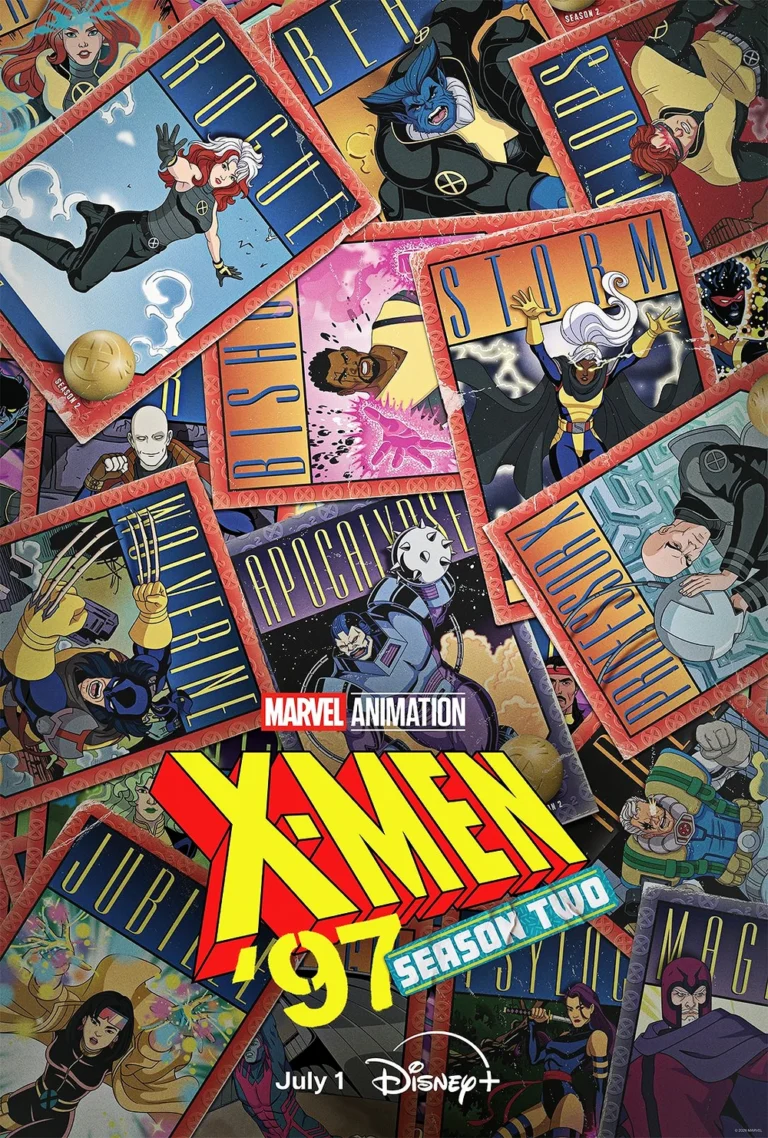
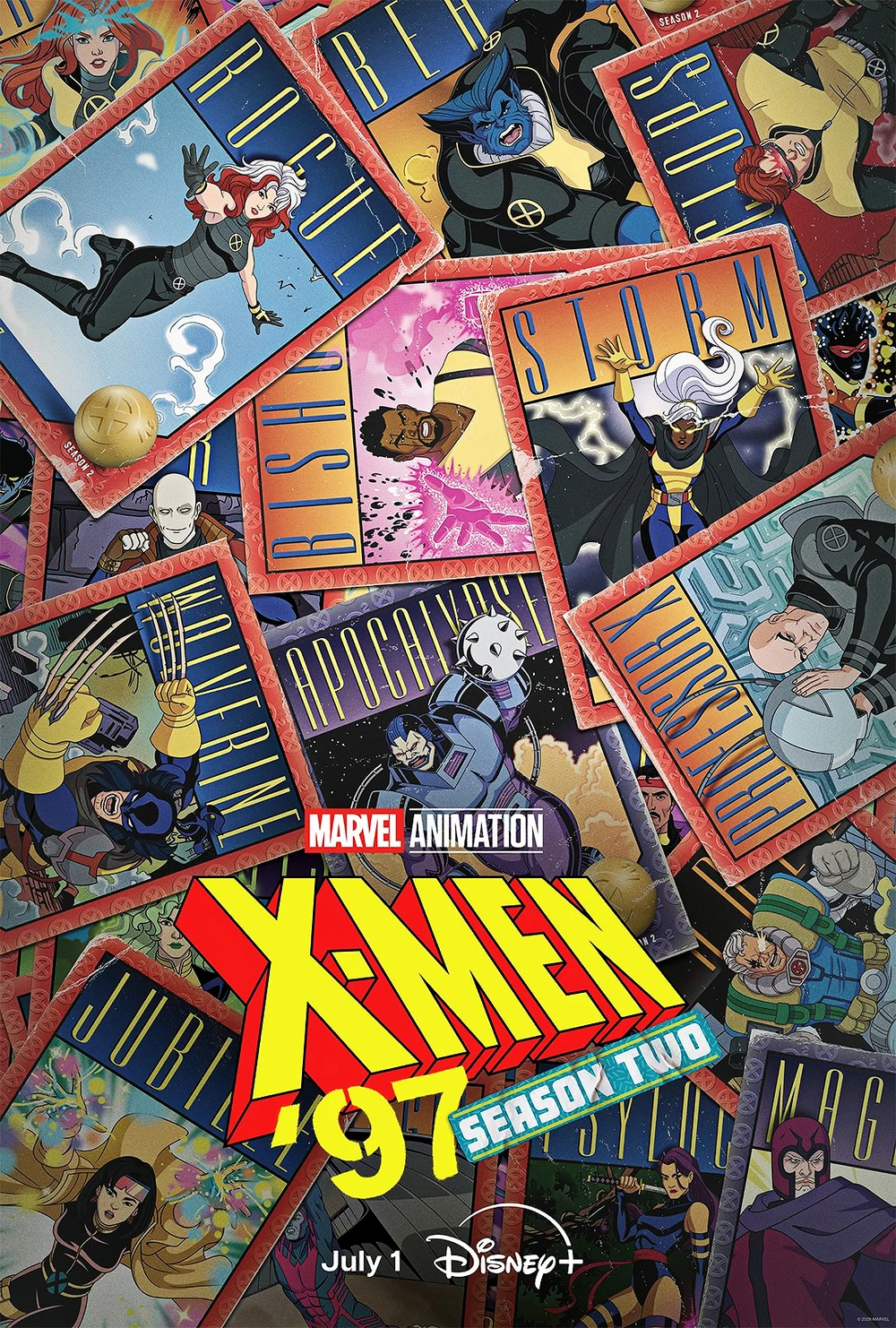
X-Men ’97 began its second season with three propulsive episodes. The fourth episode marked a significant tonal shift for the series. In March 2024, Marvel Studios Animation let go of the show’s creator and primary writer, Beau DeMayo. After leaving, DeMayo said the rest of season two is “pretty sad” and does not reflect his original vision. He also explained that the season was reduced to nine episodes because Marvel Studios Animation scrapped his planned Onslaught finale. On X, DeMayo described this decision as the studio’s “‘we know better than the comics’ agenda.”
DeMayo based his intended Onslaught storyline on the 1996 Marvel Comics crossover event. In the comics, Professor X suffers a mental breakdown and shuts down Magneto’s mind. As a result, Magneto’s darker impulses merge with Xavier’s subconscious, creating Onslaught—a powerful psionic entity that threatens the entire Marvel Universe.
However, following DeMayo’s departure, new head writer Matthew Chauncey oversaw the substantial revisions and rewrites of DeMayo’s story. This season also credits five other writers: JB Ballard, Bailey Moore, Antony Sellitti, Brian Ford Sullivan, and Mariah Wilson. Jake Castorena serves as its supervising producer. Their adjustments altered certain elements while aligning with adaptations of the Rise of Apocalypse, The Adventures of Cyclops and Phoenix, and X-Force story arcs from the comics. So, while it’s still DeMayo’s story, they chose to radically change how it’s told.
But Season 2 Stumbles Under the Inherited Weight of its own Ambitions.
Following the events of Asteroid M, the X-Men get split up and displaced across time. The gutted potential of what the season could’ve been is palpable. Instead, we get themes of destiny and endurance that force the heroes to navigate not only the distant past but a dark, ruined future. Magneto, Professor Xavier, Nightcrawler, Beast, and Rogue end up in Ancient Egypt, 3000 B.C. The narrative doesn’t fumble the Rise of Apocalypse arc, a character voiced by Ross Marquand. The problems begin with everything that follows. For four episodes, the show builds Apocalypse up as a terrifying, immortal despot.
As a young En Sabah Nur, Rogue challenges him directly. When he claims love is just pain and a weakness, she tells him that love is “the only thing that makes life worth living.” She even hints at his future, saying, “I do hope you get to experience it one day. For all our sakes.” Yet by episode 8, the show treats his ancient and foundational romance with Candra almost like a footnote.
The Fantastic Four don’t appear in the season, except when Morph briefly transforms into Reed Richards’ Mr. Fantastic. X-Men ’97 still borrows from Fantastic Four stories featuring Rama-Tut, an alter ego of Kang the Conqueror. In the comics, Rama-Tut travels back to ancient Egypt to claim a young En Sabah Nur as his heir. In the show, Kang the Conqueror serves as another quick, expendable reference. After the X-Men foil his plans, he reveals his true identity and exits like a villain from a campy 80s cartoon—Kang!
The X-Pendables
DeMayo makes several valid points. Still, as a fan of the animated series for over 30 years, I appreciated Cable’s storyline. Cyclops and Jean Grey end up stranded 2,000 years in the future. The show adapts this plot directly from the 1994 limited series The Adventures of Cyclops and Phoenix. In that comic, Mother Askani brings their minds to the future. Disguised as “Slim” and “Red,” they secretly raise a young Nathan Summers (Cable) to defeat Apocalypse.
Season one already suffered from relentless pacing. Many viewers hoped season two would improve. Unfortunately, it doesn’t. Storm, Wolverine, and Morph remain somewhat sidelined. After Magneto strips Wolverine of his adamantium in season one, he spends this season trying to get it back. Yet the show reduces a major part of his identity to a weird and almost pointless, Expendables-like episode that feels like a wasted half-hour.
Not to mention the final episode and the character the show chooses to sacrifice this season. While it comes without warning, it also comes without emotional demand. And I mean this within the context of the writer’s room; I am angry. It felt lazy.
Survival of the Anticlimactic Fittest
As the heroes and Apocalypse make it back to 1997, with some character resurrections, the stakes feel stripped of their dramatic weight. That momentum from the first four episodes: gone. What should have been an Endgame-level event devolved into a quaint, anticlimactic skirmish.
Apocalypse has barely inhabited his stolen, resurrected character as a vessel before a structurally convenient, over-powered Rogue (Lenore Zann) arrives to neutralize him with ease. It is an astonishingly flat resolution for a character like Apocalypse defined by millennia of meticulous planning. When measured against the sweeping, operatic stakes of the original 1990s “Beyond Good and Evil” saga, this finale dissolves into barely-memorable insignificance. An immortal conqueror’s grand, epoch-spanning preparation is fundamentally reduced to minutes of hollow spectacle
The Verdict
Season 2 of X-Men ’97 unfortunately fails to execute its promise as the nostalgia extravaganza delivered in its debut season. The narrative splits characters across convoluted timelines, which accelerates its unapologetic pacing into infamy. Major storylines, like Wolverine’s bone claws, are introduced and then give viewers nothing. While the animation remains spectacular, the emotional resonance feels entirely missing. Ultimately, it delivers a rushed, barely average season.