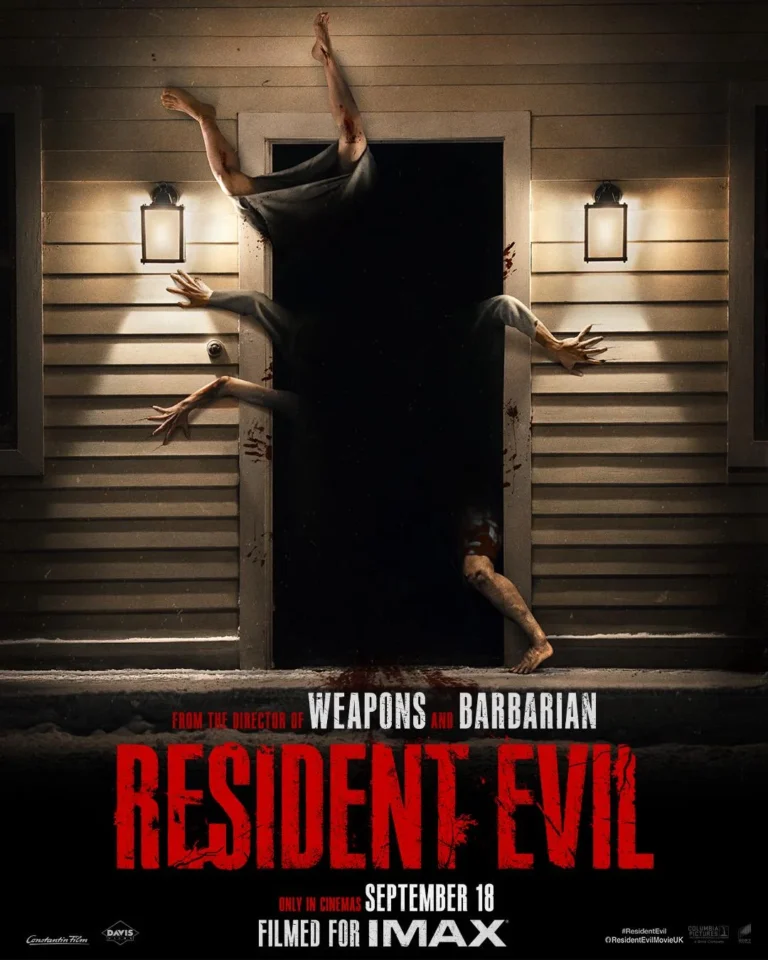
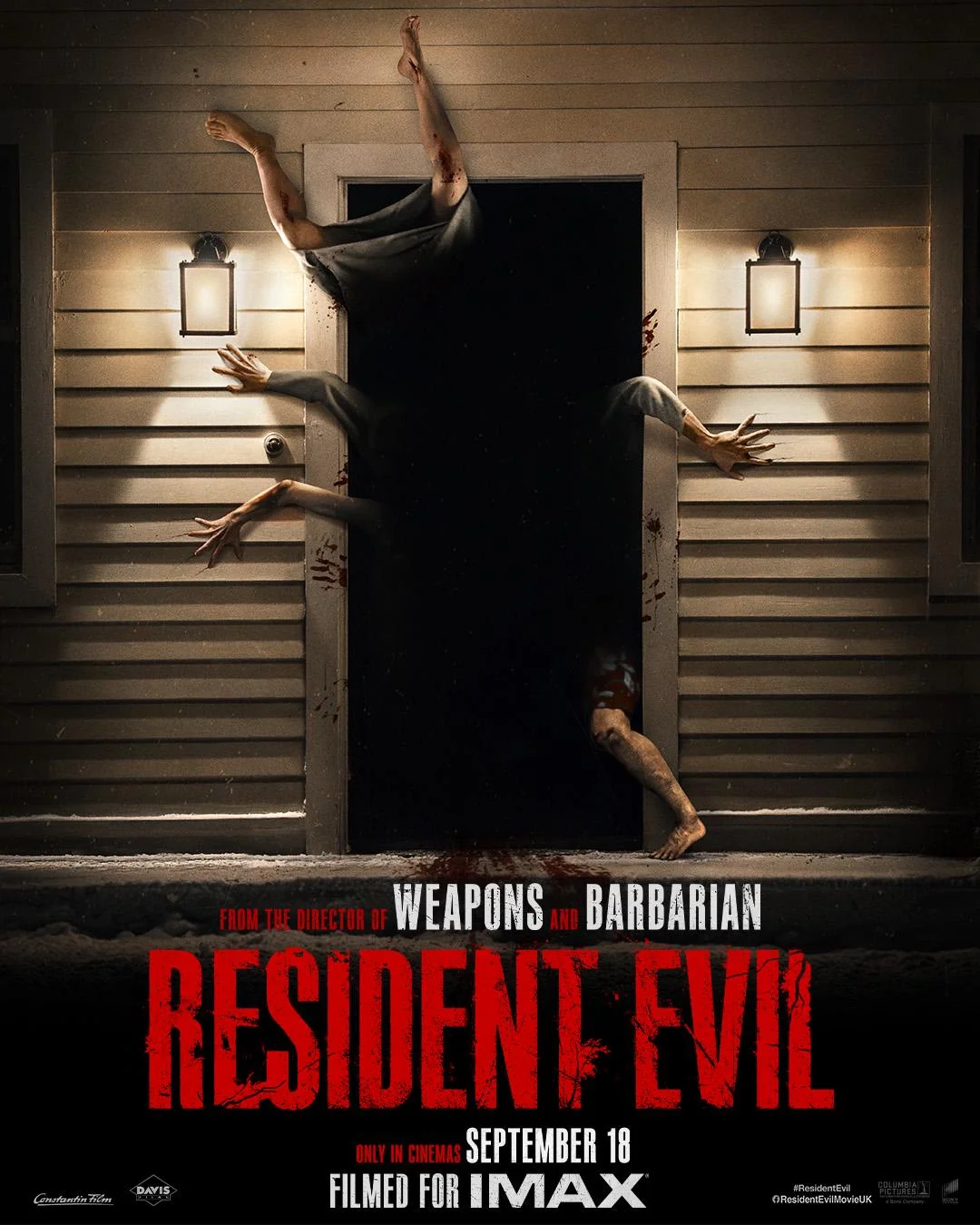
Resident Evil (2026) is the first of the franchise’s nine live-action adaptations that understands the survival-horror video game genre today and its audience.
And you give this responsibility to a “glorified Postmates driver!”
Bryan is a medical courier with a simple job: deliver a package to Raccoon City General Hospital. However, his routine night quickly turns to chaos when a terrifying outbreak erupts. Suddenly, Bryan finds himself in a relentless fight for survival. As mutated creatures close in, he must use all his wits and courage to escape this nightmare.
Played by Austin Abrams, Bryan is not Leon S. Kennedy or Chris Redfield. He’s not William Birkin or Nyx, either (well, okay—maybe not exactly). Bryan feels more like a non-playable character (NPC), thrown into the Resident Evil universe with no preparation, no plan, and no idea what’s coming. Through him, we experience the fear and witness the poor decisions characters often make in horror movies. For Resident Evil (2026) this is the direction Zach Cregger—the filmmaker behind Barbarian and Weapons—chose. And it works, like really, really well.
Cregger’s adaptation may not win an Oscar like Weapons did, but gamers and nerds into all types of cool sh*t will definitely appreciate its 14 specific Easter eggs and game references. There’s a certain inside-joke feel when Bryan sarcastically yells at Dr. Paul, an Umbrella scientist (Paul Walter Hauser), that they gave this responsibility to a “glorified Postmates driver!” These moments land perfectly, striking a balance between horror and dark comedy that is rarely seen in video game adaptations.
The Defining Capcom Video Game Moments on the Big Screen
As a millennial, even the term “video games” sounds old to me. Still, I remember it like it was yesterday. Resident Evil 2 begins by showing how Chris Redfield and Jill Valentine saved the day at the mansion in the first game. Then, Leon Kennedy and Claire Redfield meet during a full-blown zombie apocalypse in Raccoon City. They try to escape in a police car, but there’s a zombie hiding inside. The car crashes, a gas tanker almost kills them, and that’s when the gameplay starts.
Cregger pays homage to this iconic moment in the 2026 film when Bryan hits a woman with his car on a snowy road—she’s not quite herself. Moments before, St. George Hospital tasked Bryan with a special package; that was his mission. For the lore nerds, George Hamilton is the doctor at Raccoon General Hospital during the events of Resident Evil Outbreak, and “George” is also a nod to George A. Romero, the patron saint of zombie films. With Cregger, you get a high-brow synthesis of sly homage, comedy, and horror.
This unique blend works because Zach Cregger is a founding member of the comedy troupe The Whitest Kids U’ Know. He’s also a millennial like myself. The older we get, the more we find a younger generation questioning the absurd logic of our childhood entertainment. As seen in Barbarian and Weapons, his “bait-and-switch” storytelling sets up standard horror tropes or conventional premises, only to violently and comedically derail them by answering the questions that audiences never realized they needed to ask.
Wait, so 14 Specific Easter Eggs and Game References?
In every act of Resident Evil (2026), Bryan’s main mission unravels into terrifying, complicated side quests. The film is authentically horrifying, yet often hilarious. Cregger filters classic video game logic through his signature dark, anxiety-inducing comedic horror, anchored by the ordinary and under-equipped Bryan. This subverts B-movie expectations but remains faithful to the franchise’s roots.
Raccoon City, set in the American Midwest near the Arklay Mountains, feels alive with detail. Bryan gets his first weapon from Sheriff Wilson (Johnno Wilson), but fumbles with the safety in a tense, brilliantly shot scene. The title card, “RESIDENT EVIL,” glows in bright bloody red, letting you know that “gameplay” has begun.
Visually, the film’s practical effects and on-location shooting in Prague—complete with snowstorms and rural desolation—intensify the sense of isolation. Bryan explores farmhouses and shacks that pay homage to both the Spencer Mansion and the Spanish rural village from Resident Evil 4. Remember? The game with parasite-infected barn dogs who whip out creepy tentacles?
Instead of relying on traditional movie cutscenes, Cregger builds sequences around in-game mechanics. Bryan searches for weapons and tools, faces bizarre obstacles, and encounters classic inventory puzzles.
Iconic details make cameos, like the “Green Herb in Bucket” and a “Room With a Typewriter.” Bryan even replenishes his health by eating cereal and milk, a hilarious twist on the series’ healing mechanics. He finds a shotgun and ammo straight from the games moments before a relentless zombie stalks him. Each moment ramps up both the horror and the humor.
Bryan isn’t Leon Kennedy or Chris Redfield—he’s just a regular guy. When he finally reaches Maxine (Kali Reis) and Paul, Umbrella contractors with crucial insight into the unfolding disaster, he shouts, “I only use guns in video games. It’s confusing in real life!”
WTF are Leon S. Kennedy, Jill Valentine, or Claire Redfield—or Anyone?
Cregger’s Resident Evil delivers a fast-paced, 90-minute survival horror experience. The film keeps viewers on edge as Bryan scrambles for ammo, solves puzzles, and upgrades weapons—just like in the games. However, longtime fans may feel frustrated. The film leaves out legacy characters like Leon S. Kennedy, Jill Valentine, and Claire Redfield. Instead, we follow Bryan, who reacts more like an NPC dropped into their chaos.
Despite stepping away from classic Capcom characters, the plot stands strong on its own. Other than mentioning the Umbrella Corporation, the film might feel like a standalone zombie thriller with the Resident Evil name attached to it. To me, this is a good thing, but I agree it’s a valid point of criticism for purists.
The names—Raccoon City and the Umbrella Corporation—register as little more than atmospheric set dressing, serving primarily to justify the presence of monsters rather than to propel the plot. Paradoxically, the film’s greatest achievement is its strength as a self-contained work; so assured is its storytelling that it could do away with the franchise branding altogether and stand confidently as a spiritual successor.
There is no trace of Albert Wesker, no viral conspiracies unfolding within the shadowy halls of a grand mansion, and no Umbrella executive orchestrating chaos from behind a boardroom desk. Instead, Cregger’s Resident Evil operates almost entirely as an alternate-universe, standalone narrative. It’s a rare opportunity to see a 30-year-old video game franchise from a fresh perspective. Like those of us at my second viewing discussed, an after-credits scene would’ve indicated confidence and commitment to this daring new direction.
The Verdict
Resident Evil (2026) is a fast-paced and wonderfully chaotic helping of survival horror. By foregoing the usual expectations of Capcom’s video game universe, Zach Cregger successfully delivers an experience that perfectly captures the terrifying thrill of exploring these tropes with real-world sensibilities and a low inventory screen. It treats the absurdity of video game logic with the exact blend of reverence and dark humor required to make it work on film. Driven by Austin Abrams’ pitch-perfect performance, it stands as an exhilarating, gorefest that honors the spirit of the franchise by simply being an interesting horror flick.