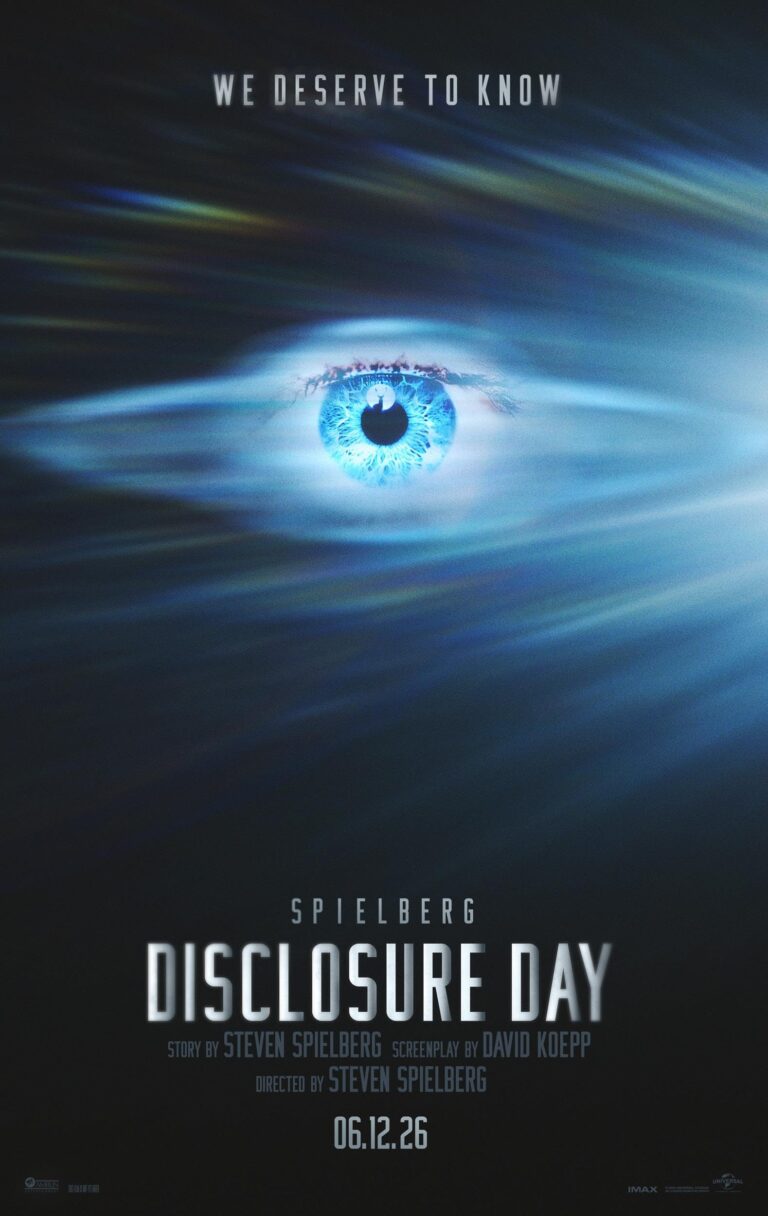
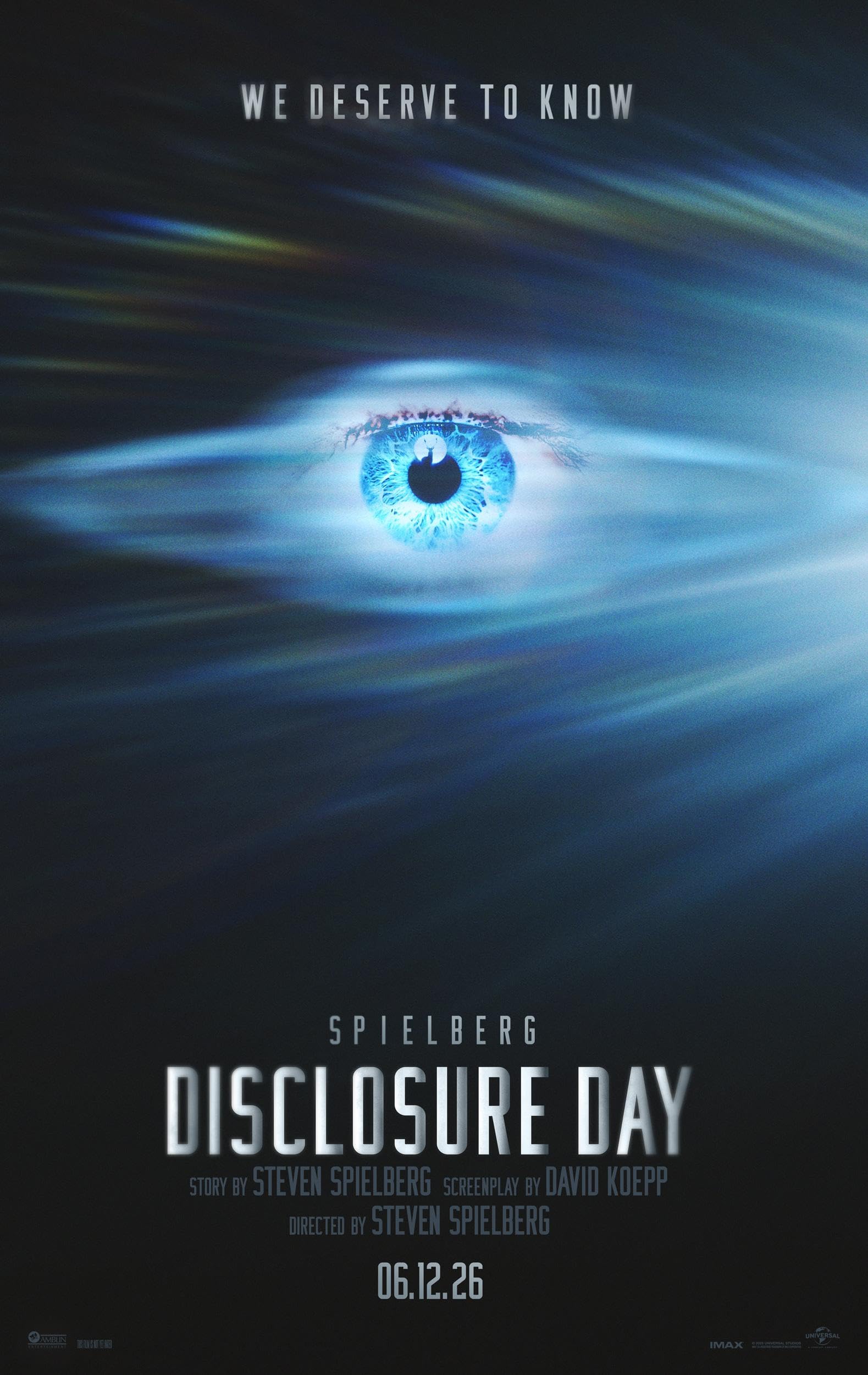
There’s something about Spielberg movies, right?
For over 50 years, Steven Spielberg has directed almost 40 feature-length films. Giant great white sharks terrorize beachgoers. A mild-mannered archeology professor doubles as a globe-trotting adventurer. A German industrialist saves the lives of Jewish refugees during the Holocaust. Three of Spielberg’s films adapt well-written, cinematic books by my favorite writers: Jurassic Park, Minority Report, and Ready Player One. But when he makes movies about extraterrestrials, he taps into a passion that feels more empathic than formulaic.
Why Do Spielberg’s Alien Stories Feel So Human?
Close Encounters of the Third Kind, E.T., A.I. Artificial Intelligence, and War of the Worlds—these films aren’t just trope-driven. Instead, they’re fundamentally human. We see fractured families, broken individuals with repressed empathy, and a childlike perspective. When cosmic forces measure their lives, the best characters don’t feel small. Rather, they realize they can heal their deeply personal wounds. And now, Disclosure Day brings all of this—and more—to our real-life 2026 world.
Are We Finally Ready for Government Disclosure?
We are living in an era of justifiable speculation versus gate-kept transparency. For example, in 2017, The New York Times revealed the Pentagon’s Advanced Aerospace Threat Identification Program. Additionally, in 2021, J.J. Abrams’ Bad Robot and Glen Zipper released a docu-series about our fascination with unidentified flying objects. In November 2025, director Dan Farah released The Age of Disclosure, a documentary urging the U.S. government to tell us what it knows about phenomena once called U.F.O.s. Just last month, the Pentagon declassified files from 2025. These files include eyewitness accounts from service members, drone pilots, and intelligence officers about “pulsing balls of light” and objects moving in weird, unexplained ways.
Suburban Reality Forced to Confront Cosmic Truths

In Spielberg’s Disclosure Day, written by David Koepp, ordinary suburbia meets extraordinary wonder. Emily Blunt and Josh O’Connor star as a meteorologist Margaret Fairchild—her chosen career path and “calling” is predicting Earth’s atmospheric changes—and a mercurial cybersecurity expert Daniel Kellner, who has a knack for analyzing complex patterns. Together, they find themselves at the center of a movement to expose the government’s cover-up of extraterrestrial secrets.
When the Sci-Fi Is Really Sci-fying!
Most film reviewers will probably say “a lot is going on” or call the ideas “convoluted.” Disclosure Day is original IP, but I’ve still seen this criticism from critics. To me, that means they don’t understand how challenging it is for Spielberg and his screenwriters to bring brilliant speculative fiction—about theology and aliens—from concept to screen.
I’ve seen it in reviews of the past about adaptations like Jurassic Park, Minority Report, and Ready Player One. For me, it’s an indicator they probably haven’t read authors like Michael Crichton, Philip K. Dick, or Ernest Cline, who raised such profound questions. Instead, you get performative, intellectually pretentious lines, dismissing the hard work of everyone involved—who most likely has read the source material. Meanwhile, super-fans like me appreciate the rewarding books that inspired such films. I see the vision.
With Disclosure Day, these critics don’t realize they only get to sound smart and unchallenged because Koepp and Spielberg put these questions within their conceptual grasp for the screen.
[Pro tip: Ask these critics, “What part of any particular sci-fi adaptation did you feel was ‘convoluted’? What made you feel that way?”]
Is the Truth Really Out There, or Are You a Nerd?
Privileged, accidental gatekeepers control media. They don’t mean to; it’s just who they are as humans. Disclosure Day explores this archetype through the shadowy private organization Wardex, led by Noah Scanlon (Colin Firth), who relentlessly pursues cybersecurity expert, Daniel Kellner (Josh O’Connor). Even in real life, the government sometimes tries to prevent information from spreading. Sometimes, leaders make that decision because of their own intensely personal wounds. Scanlon does everything he can to gatekeep the truth (pun intended). [Insert X-Files theme music here.]
Filming Locations—and What’s with Spielberg and Indiana?
Although the story is set in Kansas City, Missouri, Spielberg shot most of the movie in Northeast locations: New Jersey, upstate New York, and Steiner Studios in Brooklyn. For instance, there’s a scene where Daniel and his former nun girlfriend, Jane Blankenship (Eve Hewson—the daughter of U2’s Bono, who worked with Spielberg in 2015’s Bridge of Spies), are on the run and stay at the “Inn-Di-ana Motel.” The Indiana recurrence is Spielberg’s auteurist way to continue the “Smalltown, U.S.A.” motif, which began with Close Encounters. He drew inspiration from intense UFO activity and reports in Muncie, Indiana, during the early 1970s. Ironically, Close Encounters was filmed in Alabama, with its climax at the Devil’s Tower National Monument in Wyoming.
Wonder Begins With a Child’s Question
Don’t forget that Disclosure Day and Close Encounters are movies. No credible UFO activity ever took place at Devil’s Tower, but Spielberg’s epic third act sparked lasting tourism and pop-culture lore. When directors film relatable human challenges in awe-inspiring yet mundane places, we don’t notice the geographical dissonance. Instead, we start to wonder, suspend disbelief, and follow the director’s vision. As a child, Spielberg’s father took him to watch a meteor shower in a dark sky. That kind of sky makes any child ask profound questions:
Somehow we forget how to wonder.
How would we react to extraterrestrials? What would their existence change about God? Is the truth out there? (C’mon, you thought it as soon as you read it. [Insert X-Files theme music here.] Nerd!) In our polarized world, are we listening? Do we owe such divided species the truth? Boom: Close Encounters, E.T., A.I., War of the Worlds, and Disclosure Day.
How Do Spielberg’s Nostalgic Touches Ignite Our Inner Child?
These stories are simple yet extraordinary, especially for adults preoccupied with “down-to-Earth” demands of meaning, value, and purpose in a noisy, overcrowded, gatekept world. By the end of the chases, set to Alan Silvestri’s Back to the Future–style orchestral notes, and the emotional scenes where characters survive the impossible, your inner child overflows with empathy. For the record, John Williams scored E.T. and Disclosure Day—but you know what I mean. There’s that whole Robert Zemeckis, John Hughes, Ferris Bueller’s Day Off-in-the–DeLorean vibe—you know, when Marty slides across the driver’s side hood and runs around the back just to get in the driver’s side door and yell, “Where are the keys?!” to go on a flying bike ride with your non-human homies—an energy later co-opted by Gen-Z’s Stranger Things-type music. Well, Spielberg mastered the lens flare in this genre, and it’s present in Disclosure Day.
Who Are the Central Figures in Disclosure Day’s Search for Truth?
In a changing world of movies, Disclosure Day stands out. Margaret Fairchild (Emily Blunt) serves as the “chosen one” and empath. In one scene, she zeroes in on a police officer ready to give her a ticket—not because of something she did, but because he’s struggling at home with his wife and newborn. She senses her connection to all humans, including whistleblowing cybersecurity expert Daniel Kellner (Josh O’Connor) and his girlfriend Jane (Eve Hewson), who’s no longer a nun. Margaret is in a relationship Jackson (Wyatt Russell, Marvel’s Thunderbolts), who’s good-natured but more skeptical of her newfound abilities. And Hugo (Colman Domingo), a truth advocate, whose trust is constantly tested.
Is the Real Revelation About Aliens—or About Ourselves?
Despite the action and suspense, the real payoff isn’t the aliens-among-us reveal. The country teeters on the edge of World War III. Nevertheless, Spielberg excels at moments that remind us of simple things—like emotional connection. He transforms our fear of the government and the paranoia of conspiracy theorists. The disclosure concerns aliens and UFOs, but the true revelation is our rediscovered empathy and the childlike perspective within ourselves.
How Does the Audience Experience Shape the Meaning of the Movie?
I saw the film in a theater packed with older moviegoers. As an elder millennial, I felt young by comparison. A Gen Zer in front of me watched TikTok film reviews of it on his phone during the entire movie. So not that young, but not too old, either.
Why Is This Film So Personally Resonant for Me?
But I texted my wife that her late father, a huge Spielberg and Kubrick fan who believed the truth was out there, would’ve loved Disclosure Day. As a teen, I read Whitley Strieber’s Communion and checked out The Travis Walton Experience from the library one day—he saw me with it. My ability to critique X-Files episodes scored me points as his daughter’s boyfriend. (Wait, am I a tragic nerd that doesn’t realize he’s a nerd? I’m a writer into all types of cool shit, though!) Anyway, he belonged to the same demographic as those in my theater. Their reactions during key scenes reminded me of him. For me, that alone made the movie a trip worth taking. Spielberg still has it.