
The Gamble That Redefined Modern Westerns
Believe it or not, when Taylor Sheridan first tried to sell Yellowstone—a show inspired by the emotional loss of his own family’s ranch from childhood—network executives were skeptical. They doubted audiences would be drawn to stories where land is sacred and blood is currency, or where themes of loss and legacy shape every decision. But Sheridan persisted. He bet that the mythos of the American West still mattered.
Viewing the West Through a New Lens
As a Black native New Yorker into all types of cool sh*t like camping, hiking, and climbing mountains, I’m endlessly fascinated by Western ranches and the wide-open landscapes that define them. Road trips through cattle country and glimpses of sun-bleached barns always capture my imagination. Have you ever walked into a bar as a 6’9” Black man, surrounded by people in cowboy boots, flannels, and hats? You play it cool, but your mind races: What do these folks do for a living? What stories live behind those stoic, weathered white and Indigenous faces?
Yellowstone’s Allure: Legacy, Power, and Outsiders
That same sense of curiosity and outsider perspective draws me to shows like Yellowstone. It offers dramatic answers—revealing a world where politicians are compromised by oil and lumber interests, land deals make or break fortunes, and respect is hard-earned amid unsolved murders, shifting alliances, and generations of raw grudges. All this unfolds at the intersection of an expanding town, a Native reservation, and America’s first national park. In the very first episode, Kelly Reilly’s Beth Dutton showed those television execs who passed—and the rest of us—what a true product of that world looks like when she storms into a boardroom.
Building a Television Empire
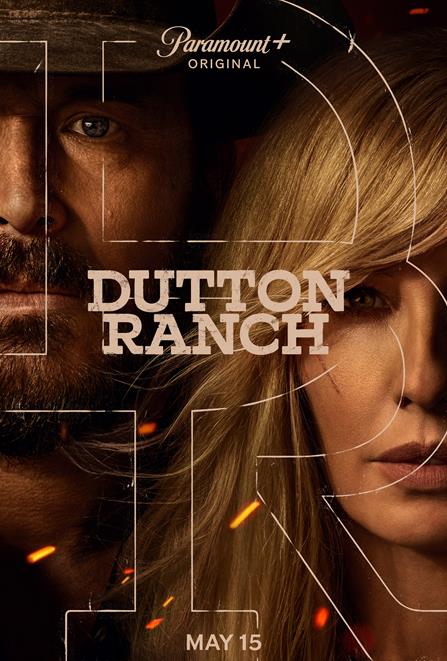
Taylor Sheridan built a television empire around the question of what messy, very human lives might actually be like in frontier settings. He transformed the Yellowstone universe into a franchise with the flagship series, two prequels, and two sequels or spin-offs. These shows are so fire! Now, with Dutton Ranch, showrunner Chad Feehan takes the reins. He trades the rugged, glacial-carved peaks of Montana for the sweat, steel, and barbed wire of South Texas. Under Feehan’s leadership, the franchise shifts its focus from tragic inheritance to cutthroat survival mode. The result is a fascinating, fast-paced, and compulsively watchable first season. The story is as much about clandestine small-town, big-money warfare as it is about cowboy culture.
Shifting Tones: From Myth to High Camp
Dutton Ranch wastes no time announcing these tonal ambitions. The sweeping, melancholic vistas that backdropped Yellowstone’s Duttons and their enemies disappear. The southern Texas sun now beams down oppressively. Glass-walled boardrooms recede; cattle-rustling replaces ruthless deal-making as the catalyst for violence. The ranch remains, but it becomes less a sacred trust and more a chess piece in the wealthy’s games of frontier fortune and legacy-making.
Unmatched Performances and Fierce Matriarchy
What sets Dutton Ranch apart from other spin-offs is its commitment to performance and atmosphere. Kelly Reilly, as Beth Dutton—the franchise’s most volatile force—shows new range as she faces Texas’s unfamiliar power structure. We see chinks in her signature, invincible Montanan armor. She’s wounded and desperate, which makes her even more compelling than in her Yellowstone arc. Reilly, as Beth, reaches new, more complicated nuances of vulnerability, grit, and rage. Even her most outlandish showdowns feel rooted in emotional truth.
Annette Bening arrives as formidable Texas rival Beulah Jackson, and she turns this season’s dramatic gears. Bening brings gravitas and cold, mechanical calculation. She turns bureaucratic disputes into scenes of deep, operatic intensity. Beulah’s sharp back-and-forths with Reilly are the show’s high points. Dutton Ranch, from top to bottom, is unapologetically strong-woman centric.
Their exchanges with everyone else elevate even the clunkiest dialogue. Around them, the expansive supporting cast inhabits the world with a lived-in authenticity. Family members, sheriffs and deputies, townspeople, ranch hands, and fixers all carry the scars of their own battles. Even minor subplots resonate with the season’s themes of inheritance, loyalty, betrayal—and fierce matriarchy.
Supporting Characters: The Backbone of Drama
Beth’s supportive husband, Rip Wheeler, and adopted son Carter both face brutal Texas rivalries. Oreana Jackson is a defiant rebel caught in a forbidden romance with Beth and Rip’s son, Carter, while fighting the heavy expectations of her powerful grandmother, Beulah.
Dr. Everett McKinney, played by Ed Harris, is the local veterinarian in Rio Paloma, Texas, and a Vietnam War Navy vet. Beulah’s two adult sons also stand out: her biological son, Rob-Will—a reckless enforcer—and her adoptive son, Joaquin, the family fixer, navigate dangerous vendettas as they strive to protect the Jacksons’ massive empire. Meanwhile, Sheriff Handy Wade operates as a ruthless local lawman caught between the warring ranches. His primary challenge is navigating corrupt alliances—frequently shooting unarmed men and manipulating the law to favor the highest bidder.
The American West, Remixed
As I mentioned before, on road trips I’ve walked into many small-town frontier establishments. I’ve met plenty of cool locals, but when I wasn’t properly introduced, my imagination ran wild with backstories. Dutton Ranch continues where Yellowstone left off, dramatizing the American West for viewers like me. It becomes both a stage for epic drama and a mirror reflecting who belongs—and why.
Soapy Swagger and Frontier Grit
Where Yellowstone thrived in operatic tragedy, Dutton Ranch excels in high-camp energy reminiscent of a primetime soap. It’s like Courtney Kemp’s Power universe, but with white, Indigenous, and Mexican characters doing frontier culture stuff. Some of these folks even push bricks, stand on business, and smoke their opps if need be. Like “bloaw!”—only in cowboy boots, flannels, and hats, skirting off in SUVs. By the season one finale, I found myself praising Feehan and left with a severe show hole. Even with its testy missteps, I want more.
Testy Missteps in the Formula
Yet Dutton Ranch swings big and sometimes stumbles under the weight of its own ambition. The show’s biggest shortcomings come from shortcutting complexity. Characters figure out sprawling cartel syndicates in a single episode. The unceremonious, almost off-screen fiery destruction of the original ranch forces a move to Texas. It feels like an emotional bait-and-switch, erasing hard-earned mythology without an adequate replacement.
Then, characters conveniently dispose of the opps’ bodies in abandoned mine shafts—a contrivance that strains credulity given modern forensics and sharp-eyed locals. Dialogue often tips into heavy-handed monologues about corporate greed and American decline, sacrificing natural debate for soft-sold soapboxing. These narrative leaps inflate the stakes but trade away the drama of earned tension and logic. What should deliver a gritty, character-driven Western instead relies too often on melodramatic shortcuts and predictable tropes. Dutton Ranch’s boldness remains undeniable, yet its reliance on plot convenience and speechifying risks alienating viewers who crave the authentic, earned storytelling of Yellowstone.
A New Frontier for Prestige TV
Dutton Ranch arrives at a pivotal moment for both Paramount Television Studios and 101 Studios and the broader landscape of prestige television. As networks and streamers race to build interconnected universes, Sheridan’s franchise—now under Feehan’s creative direction—tests whether such storytelling can thrive without its original anchor. By transposing the Dutton saga to Texas and foregrounding corporate intrigue, the show aims to appeal to loyal Yellowstone viewers while courting fans of high-stakes, face-paced dramas.
Thematically, Dutton Ranch abandons the mythic sweep of the American West to focus on legacy—how families, corporations, and communities navigate inheritance when the old rules no longer apply. The show achieves its greatest accomplishment by refusing to romanticize tradition: continuity delivers both blessing and curse. Every generation inherits not just land but debt, trauma, and impossible expectations—a truth that gives the series its melancholy depth.
The Verdict: Imperfect, Addictive, and Unmissable
Dutton Ranch’s debut season brings a paradoxical kind of awesomeness—relentlessly entertaining, yet it has its undeniable missteps. The show struggles with narrative discipline, but technical and performative excellence radiate from every episode. It reinvents the Western formula for modern times. For viewers seeking airtight plots and consistent pacing, the show may frustrate. But for those like me, who appreciate Feehan’s risk-taking and feel drawn to its unique blend of camp, spectacle, and genuine emotional inquiry, Dutton Ranch is a wild, addictive ride—and a bold, if imperfect, evolution for Sheridan’s ever-expanding Yellowstone universe.
But Feehan departed after this first season, reportedly due to challenges managing the high-profile cast—which includes Kelly Reilly, Cole Hauser, Ed Harris, and Annette Bening. Although widely considered a strong writer who saw the show through post-production, Feehan stepped down ahead of the series premiere. Benjamin Cavell will serve as showrunner for Season 2. He’s best known for creating SEAL Team, and for his work on acclaimed shows like Justified, the adaptation of Stephen King’s The Stand, and Homeland—including propulsive episodes like “Better Call Saul.”
In the end, Dutton Ranch serves as both a love letter to and interrogation of the American inheritance myth. The drama never hesitates to get lost exploring legacy, power, and identity of the American West—emerging, battered and vulnerable but unbowed, as one of television’s most intriguing new experiments. We’ll see what direction Benjamin Cavell takes the series in for Season 2. But Season 1? It’s a thoroughly enjoyable watch.