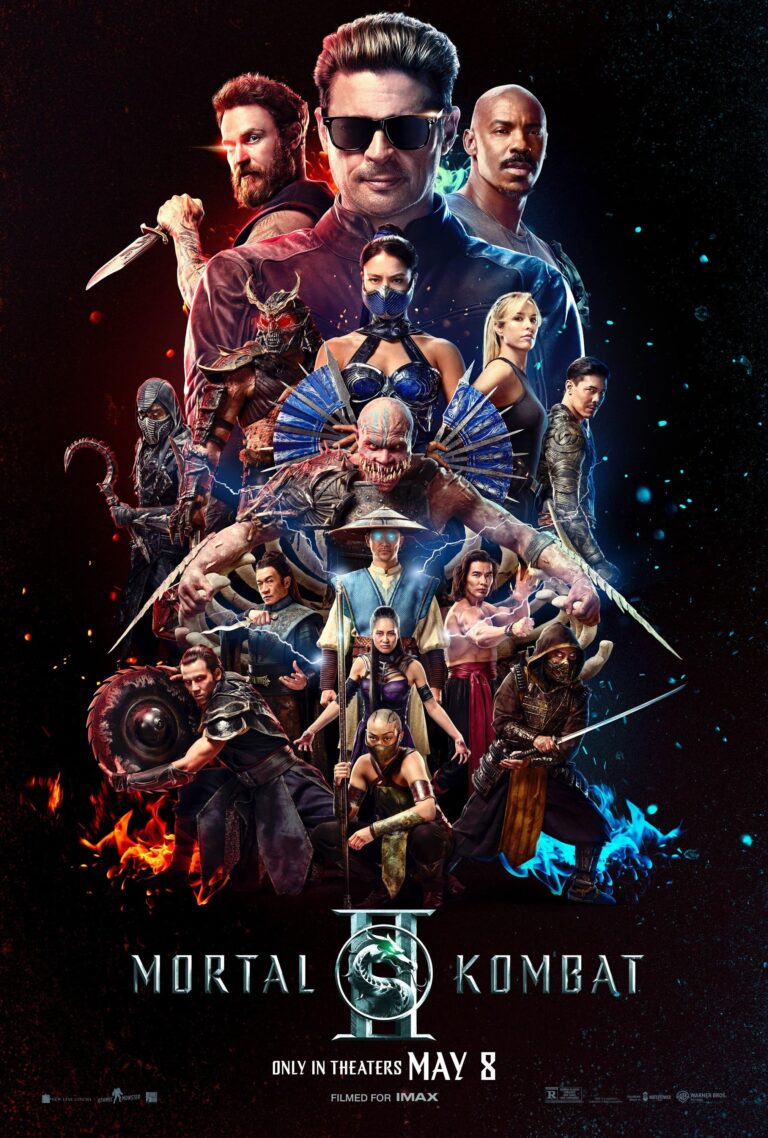
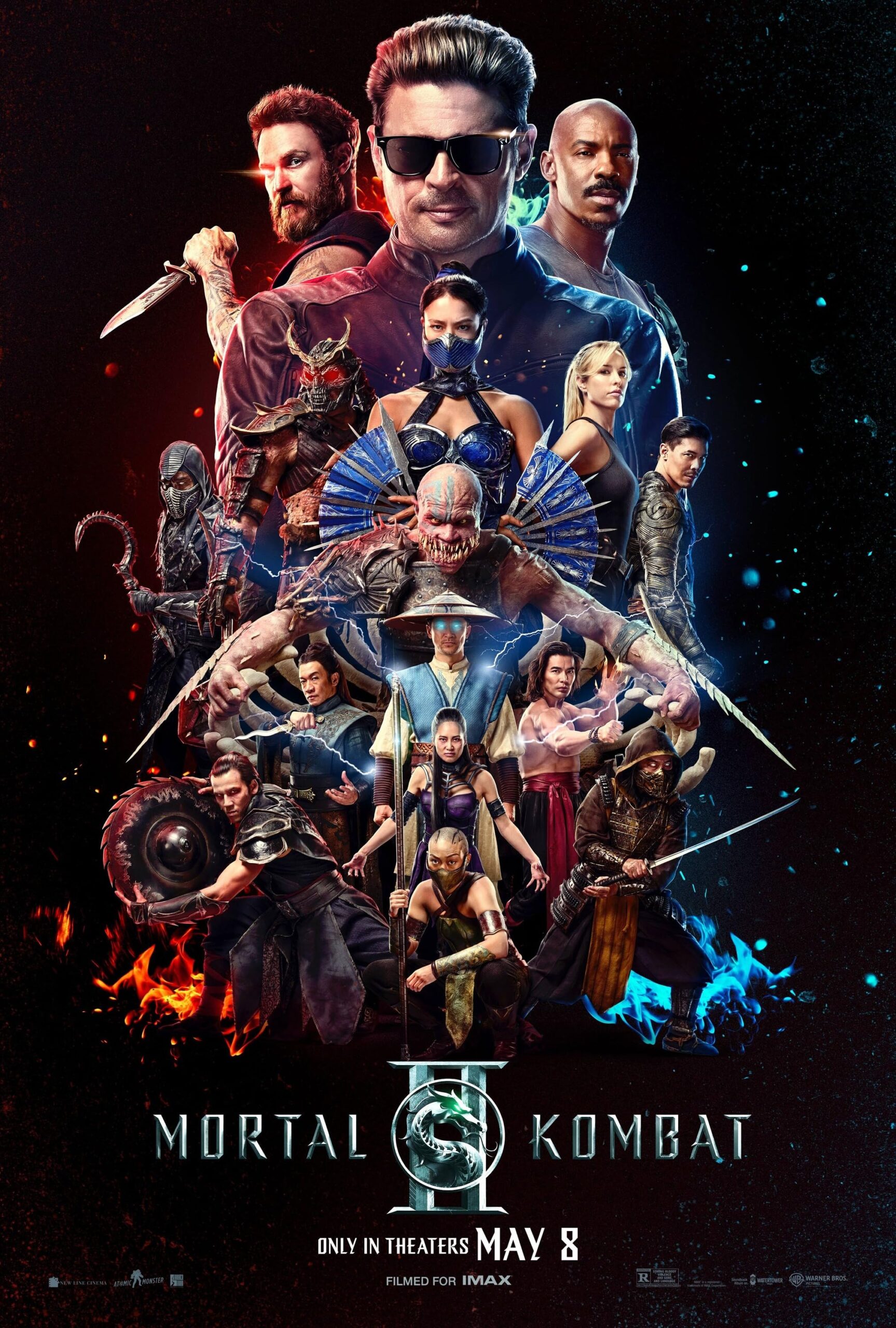
Choose your fighter!
Director Simon McQuoid’s Mortal Kombat II (2026) delivers an unapologetic spectacle. It leans heavily into the pop culture absurdity of the late ’80s and ’90s that birthed this now 30-something-year-old franchise. For emphasis, McQuoid puts Karl Urban’s Johnny Cage front and center to test the aging franchise’s might (c’mon, I had to).
The character began as a direct parody, homage, and stand-in for 1990s action star Jean-Claude Van Damme. McQuoid chooses Cage to serve as a wry, middle-aged surrogate for the typical viewer. He’s the mirrored perspective of longtime Mortal Kombat fans. Specifically, he’s reflecting those who grew up with the franchise and are now middle-aged themselves. Johnny Cage acts as a conduit for meta-commentary between generations, as newer audiences wonder: What more can this 30-something-year-old franchise have left to fight for?
The Mythos, the Madness, and the Lore, According to Ed Boon and John Tobias.
Want to hear all types of cool sh*t? The whole Mortal Kombat universe was actually a backup plan. Originally, it was conceived as a digitized action game starring Jean-Claude Van Damme himself. But the deal fell through. Its creators had to act fast—just like their proposed main character, Johnny Cage. Drawing inspiration from 1980s and ’90s martial arts cinema like Enter the Dragon, Bloodsport, and Big Trouble in Little China, they set out to tell a gritty, cinematic martial arts fantasy. It became an ancient, high-stakes tournament, where Earth’s greatest defenders had to protect Earthrealm from malevolent Outworld forces. And from that first arcade game, Johnny was always the tongue-in-cheek nod to the original Van Damme concept—an arrogant Hollywood star proving his real-world grit.
To approach Mortal Kombat II as just a commercial product is to miss the peculiar cultural ritual it has become. Simon McQuoid does much to address the palpable hesitations of the 2021 predecessor, Mortal Kombat (which, to be fair, was pretty okay—it just happened to be released during the pandemic). In this latest installment, fan-favorite champions battle to stop Shao Kahn’s growing dark rule, which threatens Earthrealm and its defenders.
The 6′8″ bodybuilder-turned-actor Martyn Ford portrays the towering menace Shao Kahn. Sorcerers Quan Chi and Shang Tsung, played by Chin Han, use the Amulet of Shinnok to steal the mortally wounded Lord Raiden’s powers and transfer them to Shao Kahn. Absorbing and channeling Raiden’s godly essence grants the fighter absolute immortality. Earth’s fighters must find a way to steal the amulet. They must also destroy it to save Raiden—and Earthrealm itself—from total annihilation.
Balancing the Creative Demands of Filmmaking With the Expectations of the Original Audience
While cinematic adaptations often take liberties with the core mythology of an original IP—or with artifacts, in this case the amulet created by the fallen Elder God Shinnok—Mortal Kombat II remains remarkably faithful, while also succeeding as a self-aware requiem for its bygone era.
“You think the world is crying out for a Johnny Cage comeback? Huh? No. They want gritty, they want grounded, they want Keanu Reeves murdering a thousand fucking dudes with a pencil. That’s what people wanna see. Not some dinosaur doing a bunch of karate poses. That shit went out in the ’90’s.”
That’s screenwriter Jeremy Slater channeling the self-serving bias and bravado logic of Jack Burton from Big Trouble in Little China. As a result, Mortal Kombat II is woven from the fabric of the ’80s and ’90s pop-culture mythology that inspired it. That’s what it’s fighting for—its own survival. In this sense, it’s as integral as Raiden’s lightning. For example, when Johnny and Raiden first meet, as the fading, disillusioned movie star leaves a comic con, Cage snarkily asks if Raiden is cosplaying as a character from Big Trouble in Little China.
The Modern Relevance Facelift: Cracking the Code
It’s not just the dialogue or character arcs that pay homage to the franchise’s roots. Mortal Kombat II is packed with Easter eggs and inside jokes that reward longtime fans and invite newcomers to dig deeper into gaming lore. Take, for instance, Dan Forden, the original sound designer and composer for the Mortal Kombat series, who used to pop out and say “Toasty!” if you landed a clean uppercut. In Mortal Kombat II, if Forden appeared and said “Toasty!” while you were playing on the Portal stage, you could quickly press Down + Start to instantly teleport into a secret boss battle against Smoke. As a millennial kid, this was the future! Forget “Up Up Down Down Left Right Left Right B A Start” for an extra 30 lives in Contra—the video game that parodied 1980s action movies like Rambo and Predator. It was all about “Toasty!”
But the film’s nods to its legacy don’t stop there. How do you explain this kind of awesomeness to an indifferent Gen-Zer—someone who craves raw authenticity, fragmented and fast-paced backstories, and interactive or participatory elements? Then there’s the character Noob Saibot, whose name is simply the franchise creators’ names spelled backwards. Joe Taslim reprises his role from 2021’s Mortal Kombat as Bi-Han. After Scorpion slays him, he’s resurrected as the shadow wraith Noob Saibot—or, in some versions, as Smoke. The film takes some creative risks with these liberties, and this is an instance where you’ll appreciate them for what they’re worth—crammed into an hour and fifty-six minute, ’90s-born video game movie.
But MKII Isn’t Without Structural Flaws and Narrative Chaos
Although the film enthusiastically commits to brutal, R-rated action, it sometimes glitches with a paper-thin narrative, uneven pacing, and a roster that forces foundational characters to fight for both screen time and their own existence. Furthermore, it often struggles to balance the chaotic ambitions of its interdimensional arena. Transitional scenes flicker between honoring video game faithfulness and developing genuine cinematic characters.
One major example is the setup to root for Kitana (Adeline Rudolph), the subjugated princess of Edenia, an Outworld realm. In the film’s opening moments, she witnesses her father’s brutal demise at the hands of Shao Kahn. Yet her quest for vengeance feels secondary when it should be central. The same goes for her bond with her bodyguard, Jade (Tati Gabrielle). Despite professing sisterly devotion to Kitana, Jade’s loyalty seems to lie more with her ruler, Shao Kahn. As the film rushes through these subplots in favor of well-choreographed fight scenes, the emotional stakes suffer all the more.
After Kung Lao dies in Mortal Kombat (2021), Outworld’s forces resurrect and brainwash him as a revenant. This twist forces Liu Kang (Ludi Lin) to grapple with the prospect of killing his corrupted former friend. Kung Lao becomes a complex, brutal tournament adversary, not just a casualty. Likewise, Sonya Blade and Jackson “Jax” Briggs barely share any meaningful screen time. Kano (Josh Lawson), who is also resurrected and clumsily given a new eye, even refers to Jax as a Rock ‘Em Sock ‘Em Robot. These iconic partnerships have been cornerstones of the franchise since the beginning, but in this film, they receive little attention. As a result, the movie forfeits the emotional connection that fans expect from these longtime video game allies.
A Washed Up Hollywood Star, a Grotesque Beast, and his Character-Defining Punch That Saved Mortal Kombat
The unlikely subplot between Johnny Cage (Karl Urban) and Baraka (CJ Bloomfield) self-aware comedy that saves not only their respective realms but the movie. What starts as a tense standoff in a Tarkatan village quickly becomes the Mortal Kombat II’s standout moment. Cage showcases his signature nut-punch winning over the razor-toothed mutant leader. This clash of styles lets the story breathe, morphing into a hilarious and surprisingly touching mentorship, as Baraka suddenly admires the washed-up action star and begs to become his pupil. The dynamic grounds the over-the-top spectacle with genuine humor and charm, giving the monster unexpected humanity and the hero a beating heart. Their relationship also provides key story progression as they team up to infiltrate Shao Kahn’s castle. Ultimately, this perfectly balanced subplot stands out as the film’s best asset, capturing the unapologetic, delightfully absurd spirit that made the original video game franchise so beloved.
The Verdict
There’s a point when Johnny get’s caught embellishing his importance. He has to embarrassingly admit to Raiden in the film’s final piece of meta-commentary:
“I may have taken some liberties. Or two.”
If you want to hear more cool sh*t, here’s a fun fact: Ed Boon and John Tobias have openly admitted to basing Raiden on John Carpenter’s 1986 cult classic, Big Trouble in Little China. Additionally, they drew inspiration for Shang Tsung from its villain, Lo Pan. So it’s only logical that in Mortal Kombat II, screenwriter Jeremy Slater gives Johnny Cage the DNA of Jack Burton—profoundly flawed, but bursting with egotistical charm. This self-serving, larger-than-life “everyman” personality defined the late ’80s and ’90s that gave the era its heart and humor. Without it, the movies and video games would have been far less entertaining. Without Cage, Mortal Kombat II would easily get two and a half stars. But you wanna know what Jack Burton says at a time like this? What the hell—three stars.