It’s no secret: Gen Z is fascinated by the Y2K aesthetic that defined millennial youth. As a millennial who lived through it, I remember an era that was uncurated, weird, and deeply imperfect. The looming threat of the “Millennium Bug” shaped everything. Fear of a computer glitch upending the world at midnight in 2000 was everywhere. Moreover, that fear built on anxieties inherited from previous generations. The Silent Generation worried about scarcity and economic instability. Baby Boomers took those fears and turned them into flamboyant, neon-lit architecture that showcased Wall Street wealth and corporate power throughout the 1980s.
Then the recession of 1990 hit, just as Generation X entered adulthood. As a result, a sense of disillusionment set in. Many Gen Xers felt burdened by accountability for problems they didn’t create. While Baby Boomers had started those trends, Gen X continued them. For those who didn’t rebel through the grunge movement—Nirvana, Soundgarden, or Alice in Chains—the response was to reshape suburban landscapes and windowless office parks.
Ultimately, these environments became the backdrop for a cross-generational struggle with surveillance, compliance, and isolation. Gradually, brightness faded, replaced by a “safe,” corporate palette: drab yellow, stained strip-mall stucco, colored wallpaper, carpets, cubicles, and kitchen appliances. That muted, depleted yellow lurked in the background of our lives until about 1999.
Enter “Backrooms”: Gen Z Reimagines the Past
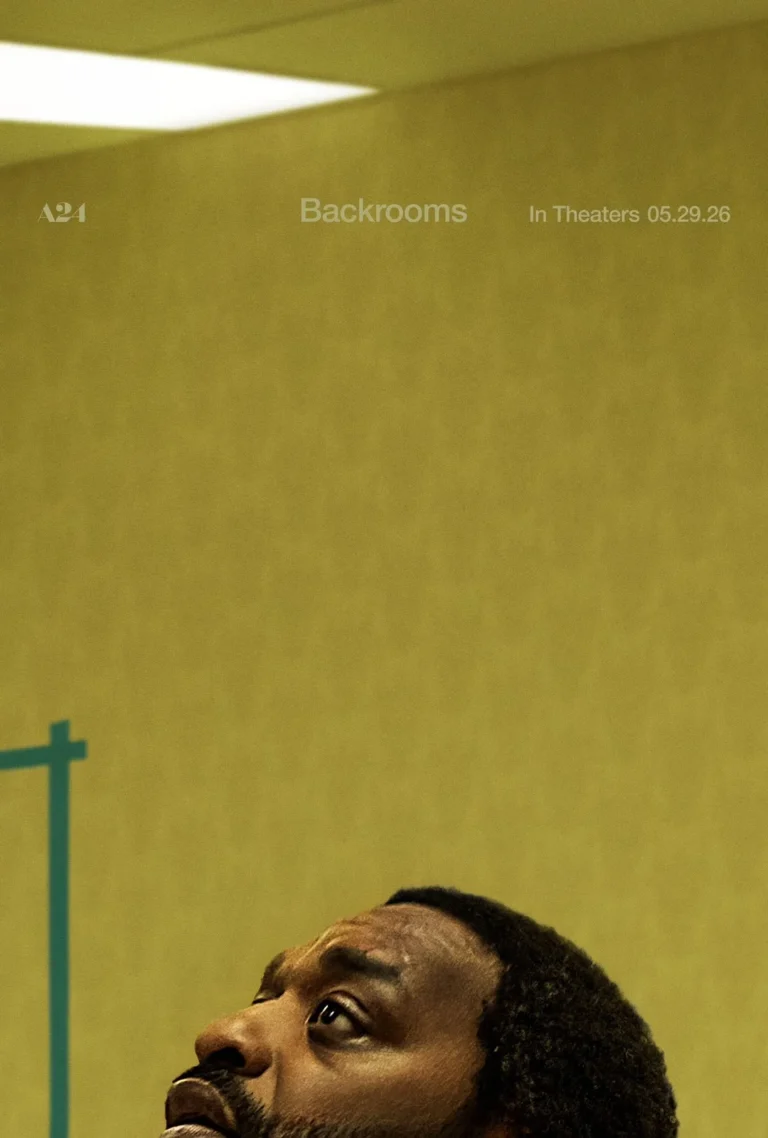
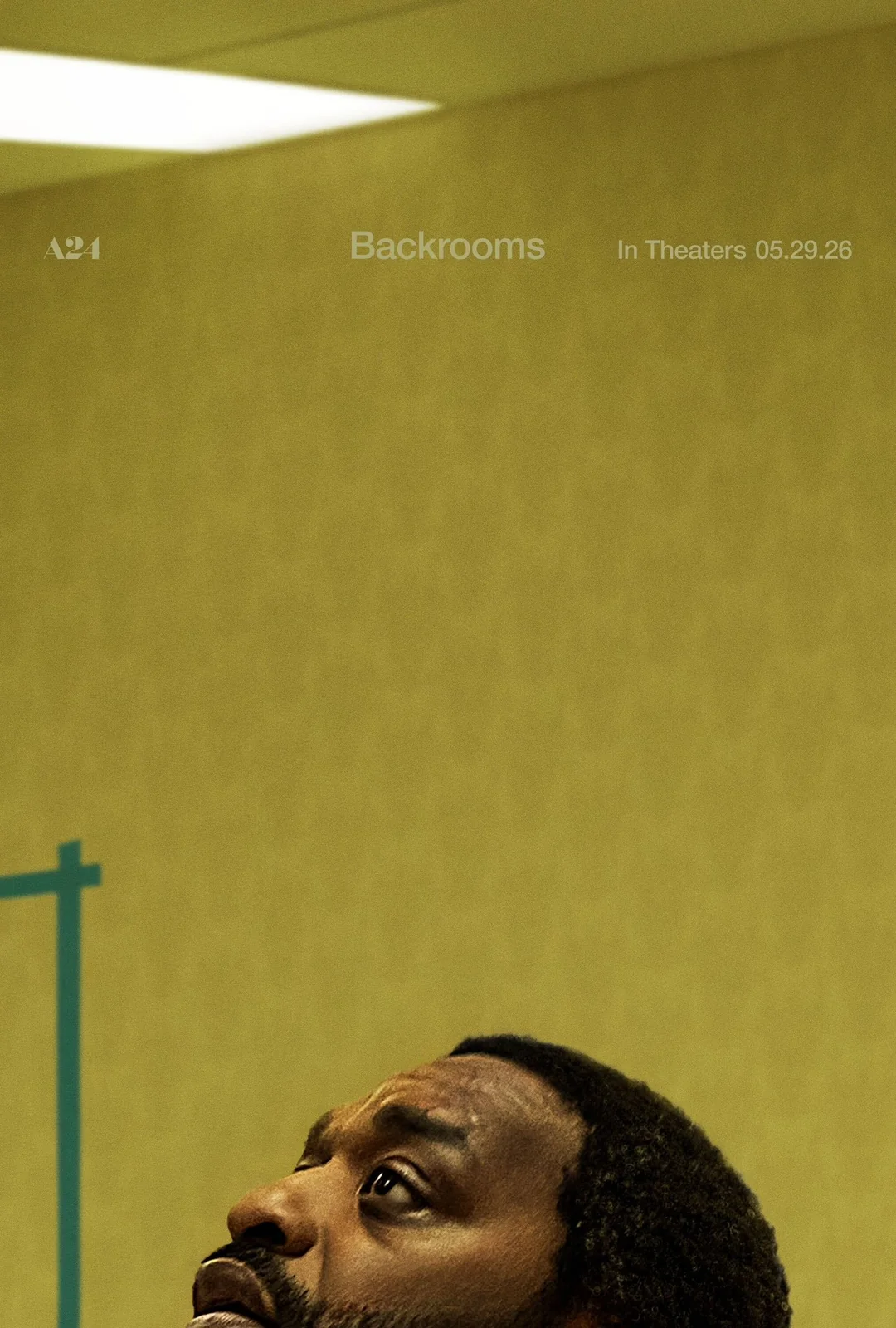
Twenty-year-old Gen Z director Kane Parsons explores this sociology in Backrooms, a horror film inspired by the viral “creepypasta” phenomenon—a collaborative urban legend born on the millennial post-Y2K internet.
In 2022, Parsons made a short film called “The Backrooms” and put it on YouTube. Instantly, the internet went nuts. He followed up with a twenty-episode web series. Eventually, that idea became this 2026 feature film. Working within A24’s auteur-driven philosophy, Parsons confronts the dread and unease of “liminal spaces.” He fills the film with empty corridors, deserted malls, and vacant offices that echo with the absence of human activity. This cross-generationally blurred architecture frames every scene. Each group, in its own way, tried to map out society’s design—without taking responsibility for the failures left behind.
Characters, Setting, and the Horror of Liminal Spaces
The film’s cast, led by Academy Award nominees Chiwetel Ejiofor and Renate Reinsve, brings palpable emotion to these eerily mundane spaces. Notably, Backrooms doesn’t rely on jump scares. Instead, it mines horror from the vacant ambiance of never-ending indifference. Set in 1990, Ejiofor’s Clark is an alcoholic and failed architect, mired in regret and personal trauma. His wife has left him. Now he sleeps in his struggling, near-bankrupt strip-mall furniture outlet in California’s Santa Clara Valley, aptly named Cap’n Clark’s Ottoman Empire.
In addition, Reinsve plays clinical psychologist Dr. Mary Kline, Clark’s therapist. She uses role-playing and talk therapy to help him manage his trauma and deep resentments, especially toward his ex-wife. Clark insists he would have been a successful architect if he hadn’t supported her through college and paid all the bills. However, he can’t quite map where his bitterness originates. Meanwhile, Kline—author of The Window Within and a series of self-help audio tapes—rarely looks within herself to confront her own traumas. One night, Clark discovers a portal to his store’s “backrooms,” finding endless, labyrinthine, and illogical architecture. For a “great architect” like Clark, its design—like his own life—should be easy to describe, right?
But where do trauma, self-deception, and refusal to build a successful life go? Not just for Clark, who clings to the title of architect despite having nothing to show for it. Kline, too, avoids looking through her own “window within.” What about those who designed suburban America—those strip malls and windowless offices? What if, inside our supposedly perfectly ordered minds, a vast, meaningless design hides? Imagine endless hallways, aimless corridors, and terrifying entities. They might be nothing but manifestations of our own indifference to the truth about ourselves and the worlds we’ve failed to build or take responsibility for.
Aesthetic, Production, and Nostalgia
Supporting characters Bobby (Finn Bennett) and Kat (Lukita Maxwell) add depth, though their generational portrayals sometimes blur the lines between Gen X and millennial sensibilities. In the Backrooms, they’re a young couple who serve as Clark’s assistant managers. Bobby is the 1990s VHS cameraman for Cap’n Clark’s Ottoman Empire. He films everything from Clark’s confusing, “everything-but-the-kitchen-sink” ads—where pirates and sultans are awkwardly co-branded for the “Ottoman Empire” motif—to documenting Clark’s exploration of the mysterious doorway in his store.
Furthermore, Parsons uses heavy interlacing and VCR distortion techniques. He pays homage to analog found-footage classics like The Blair Witch Project (1999). He uses Blender, an open-source 3D graphics tool, to evoke the VHS look and immerse viewers in this unsettling atmosphere. The film draws inspiration from video games like Portal, Half-Life, and the Japanese game The Exit 8. As a result, these influences show up in the film’s architectural isolation and lurking danger within sterile, labyrinthine spaces. Parsons weaves a mosaic of mutilated, romanticized ideas about the 1990s and post-Y2K internet-born creepypasta lore. The story takes place in 1990—nearly a decade before Blair Witch cemented the found-footage style. Even so, Parsons’ Gen Z approach feels both charming and effective.
Set Design, Furniture, and the American Suburban Dream
Will Soodik wrote Backrooms, expanding the web series into a more ambitious big-screen story. Likewise, Danny Vermette’s production design transports viewers back to 1990. He doesn’t romanticize the decor. As a millennial who was there, I know this stuff was monstrously horrendous. As a kid, I had no idea why. Now, as an adult, all the moving pieces make sense—it was by design. There’s a scene where Clark actually gets hurt when the cheaply made and mass-produced furniture he’s using as a prop in his commercial breaks. It’s a moment where Backrooms directly addresses this reality.
In the real 1990, after the recession, furniture became a coping mechanism for the loss of the high-class, lavish Gordon Gekko lifestyle of the 1980s. Now, it was hyper-accessible and cheaply mass-produced. Designers mapped out “efficiency” for an economically insecure suburban America, so people could “feel” luxurious—cheaply. That gaudy, plush, and shiny furniture in cheap veneer was designed to “pop” and sell better on low-resolution Cathode Ray Tube (CRT) TV screens. Think about those motives—“architecture”—today. Scary, right?
Main Themes and Takeaways
There’s an idea repeated in the film:
“Imagine describing a dog to someone who’s never seen a dog, and then asking them to draw you one.”
The human mind desperately fills in gaps with plausible but fundamentally incorrect details. The results look like they were drawn purely from a vague description. That’s Backrooms’ main takeaway. Watching the drawing of that “dog” on screen, or monsterously indifferent entities rather, was truly horrifing.
Backrooms is more than a nostalgic nod to millennial anxieties born on the internet. Instead, it interrogates the structural failures of modern industrialization and the psychological aftermath of these cross-generational suburban designs. The film’s aesthetic choices are meticulously accurate for the times. It captures both the optimism and imperfections that later fueled Gen Z’s fascination with the Y2K era. Similarly, like The Exit 8 game, viewers must notice anomalies in maddening, infinite repetitions to find a way out.
A Personal Perspective: What Backrooms Means for Generations Today
My viewing experience, unfortunately, was marred by disruptive audience behavior. A theater packed with Gen Z teens filmed TikToks, shouted, and periodically blurted out racially charged language—the n-word, pronounced with the hard “r”—at random. The audience erupted in laughter each time. The crowd was a mix of white, Arab, and Latino teens—in Mayor Zohran Mamdani’s New York City, by the way. “Guys, a Black actor we’re supposed to know is on the screen. This is his Oscar moment!” an Arab kid shouted, followed by more laughter.
I almost left the theater. Yet, the experience forced me to reflect. Notably, Backrooms’ diverse cast never mentions race—not once. The generational and cultural tensions I saw in the audience echoed those explored in the film itself, adding a layer of real-world horror and alienation that mirrored the on-screen message. These kids took away the cheap escapism, just like the ’90s idea of a color-blind society that movies often mass-produced, just like 1990’s furniture.
Final Thoughts
Backrooms succeeds as a profound meditation on trauma, self-deception, and the emptiness of modern spaces. Parsons’s vision is bold. Ejiofor and Reinsve ground the abstract horror in raw, recognizable emotion. The film is a surreal period horror with metatextual commentary. It bridges generational divides and confronts uncomfortable truths about the worlds we build—and fail to build.
Ultimately, Backrooms is uncurated, weird, and deeply imperfect—much like the Y2K era it depicts, and much like this review. The film prompts reflection on what we might find lurking in the back rooms of our own minds, and in the architecture of our romanticized versions of social order.