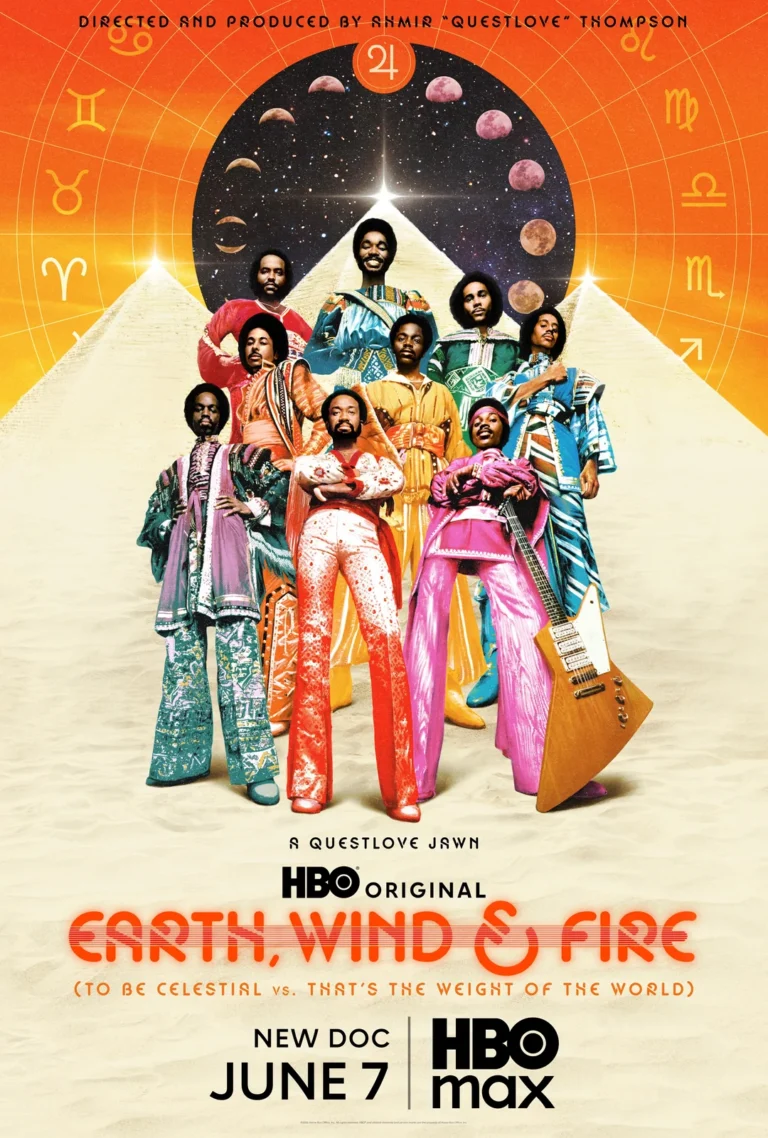
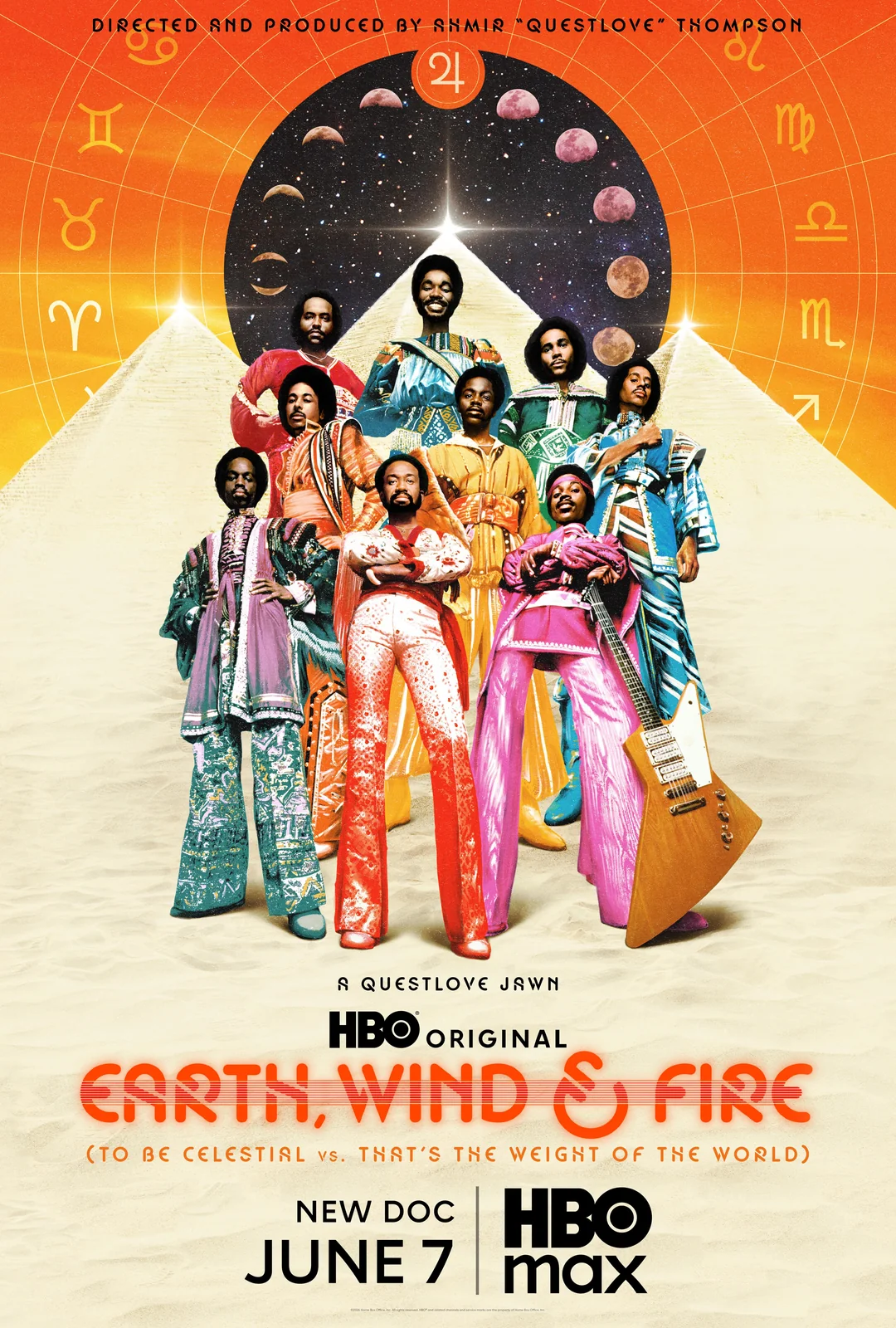
Earth, Wind & Fire (2026): Questlove’s Celestial Groove
Preeminent hip-hop historian Ahmir “Questlove” Thompson’s fourth documentary, Earth, Wind & Fire (To Be Celestial vs That’s the Weight of the World), arrives as hip-hop undergoes a massive sonic and structural transition. The film lands in the wake of monumental rap beefs and ongoing chart battles, as the genre strives to reset and preserve its foundations. While the documentary never states it outright, it makes clear that EWF are not only a prerequisite, but are inextricable from the very building blocks of hip-hop. Ultimately, though, this film is less an argument and more a luminous chronicle of the music, spirituality, and enduring legacy of EWF. Questlove’s Earth Wind Fire 2026 documentary dives deep into the legendary band’s history.
Why EWF’s Legacy Still Moves Us
The 25th annual Tribeca Festival opened with the documentary’s premiere. Afterward, Questlove’s own band, The Roots, performed live. This pairing was especially fitting. The Roots—like so many artists—owe much of their sound and spirit to the groundbreaking legacy of Earth, Wind & Fire. By the end of this nostalgia-fueled thrill ride, viewers recognize EWF’s impact not only on those who came of age during the 1970s and 1980s, but also on hip-hop itself. We even learn how Michael Jackson and Prince observed EWF’s ground-breaking showmanship and took notes on their extravagant theater-style concerts to refine their own iconic performances. Moreover, it shows EWF’s effect on humanity across five generations. EWF is a visually spectacular triumph. The documentary balances the band’s cosmic grandeur with a deeply vulnerable look at the cost of such revelry.
A Visual and Sonic Spectacle on HBO
The documentary, which premieres on HBO Max, Sunday, reveals the story behind the story. Questlove shares how Earth, Wind & Fire’s success grew from intense focus and a commitment to a higher, positive purpose. Throughout the film, viewers see never-before-seen archival audio, personal journals, and posthumous narration from the band’s founder, leader, main songwriter, and chief producer, Maurice White. As a result, Questlove explores White’s dream. He wanted a band that could serve as a vehicle for transcendental human consciousness. White demanded a lifestyle free of drugs and alcohol from his bandmates. Furthermore, he aimed to use music to elevate the human race.
From Memphis Struggles to Stardom: The Maurice White Journey
The first act, poignantly expository, recounts White’s origins in a racially segregated and violent Memphis, Tennessee, in 1941. White was born to a 17-year-old single mother who left him behind for Chicago in hopes of a better life. He was just five at the time. His mother, Edna Parker, later had five sons and five daughters with her husband, Dr. Verdine White, Sr. She supported him through medical school. Eventually, Maurice reunited with his mother and new family ten years later in Chicago. There, EWF was ultimately formed, including siblings Verdine and Fred.
Behind the Funk: Longing, Loss, and Redemption
By unearthing Maurice White’s early abandonment and relentless pursuit of transcendence, the documentary shows how the band’s meteoric rise, their otherworldly vision, White’s romantic relationships, and their eventual unraveling all grew from White’s longing for belonging.
How EWF’s Sound Shaped Generations—And Rocked the Red Hot Chili Peppers
White’s origin story is powerful. By the second and third acts, you empathize with White’s complicated, behind-the-scenes behavior and life choices. You root for the child who faced mental health, emotional regulation, and developmental challenges alone. These struggles stemmed not only from abandonment but even being beaten by racist Memphis police on his paper route. In addition, commentary from those closest to him confirms that what the audience senses on screen was palpable to those who knew him best. Sonically, EWF were undeniably a funk band. However, White was a rock star. Questlove includes Flea, bassist for the Red Hot Chili Peppers, who credits EWF’s sound and lifestyle as a formative influence.
The restoration and enhancement of the archival footage deserve special mention. The massive task of cleaning, isolating, and organizing decades-old audio reels and live recordings is handled with remarkable precision. The film seamlessly balances the legendary, punchy grooves of EWF tracks—benefiting from legendary engineer George Massenburg’s work—with crisp, modern interview audio. I predict an Emmy nomination for Outstanding Sound Editing for a Nonfiction or Reality Program. Also, if not snubbed, a shoo-in for Best Documentary Feature—a category Questlove already conquered in 2022 with his celebrated directorial debut, Summer of Soul (…Or, When the Revolution Could Not Be Televised).
The band’s performances from the 1970s and 80s now appear with stunning clarity. The film features exclusive archival material, including never-before-seen footage, all meticulously restored for vivid quality. In addition, the documentary blends these enhanced vintage images with animation and other experimental, trippy visuals. Much like Summer of Soul, Questlove’s team focused on reviving rare and long-dormant visual material. Consequently, the performances feel both contemporary and truly immersive. As a result, it feels as if you’re witnessing EWF at their creative peak.
The Band’s Cosmic Ripple Effect from our Leaders to Legends:
Commentary from the likes of Flea, Stevie Wonder, and Lionel Richie attests to the group’s cross-generational appeal and lasting influence on modern music. Even younger artists—like H.E.R., a Gen Zer, and Anderson .Paak, a millennial—offer perspective for my generation. But it was Barack Obama and Chicago native Michelle Obama, both of whom witnessed the band’s emergence firsthand, who delivered the documentary’s most resonant “mic-drop” moments.
Michelle Obama says Earth, Wind & Fire changed the way Black people saw themselves. The band also changed how others viewed the Black community. They taught a generation of Black children that they did not have to shrink themselves to fit in. Instead, they could be cosmic, magnificent, and self-defined. Barack Obama remembers his own childhood. He says, “Earth, Wind & Fire kind of said, ‘I have joy, and I have imagination, and I will force that onto the world whether they are ready for it or not.’ … I’m a Black kid in Hawaii; you don’t have a lot of people who look like you and are achieving. And I’m saying to myself, if they can do that, what can I do?”
Yes, the 44th president and the first lady of the United States. Their voices offer a definitive testament to the band’s far-reaching legacy. In February 2009, just a month after taking office, President Obama hosted the annual Governors’ Dinner in the East Room. Wanting to set a vibrant, unified, and culturally profound tone for his administration, he skipped the traditional classical or jazz ensembles and instead requested Earth, Wind & Fire. They became the very first musical act invited to perform at the White House following his inauguration.
But Behind the Music…
Marilyn White, revealed that EWF never focused on color themselves. She’s Maurice White’s longtime partner, wife, and muse. Maurice wanted audiences to not see the band through a racial lens but boundless creators creating for those who think outside the box. They first met in 1970 sharing a deeply impactful relationship lasting for over forty years, during which they had a son together, Kahbran White. EWF’s hit song “September” is an ode to that relationship and the birth of Kahbran. But she adds it was also complicated by the grueling realities of fame. Maurice’s intense musical obsession, and his unfaithfulness on the road.
Maurice White’s youngest son, Eden, is now an adult. He offers insight into Maurice’s perfectionism and complicated nature affected not only with him, but also with his mother. There’s also mention of Maurice’s first-born and only daughter, Hemeya “Mimi” White who’d he kept secret from Marilyn. Without slowing down the music and vivid visuals, the segment also highlights how Maurice’s uncompromising creative control led to deep fractures with others. This was especially true with his bandmates, crew, collaborators, and siblings Fred White and Verdine White.
The Verdict
In the end, this documentary is more than a documentary—it’s a joyous, restorative act of cultural memory. Questlove crafts a film that crackles with celebration, pain, and transcendence. It unite generations in celebration and truth. The band’s story is told through music, struggle, and unfiltered vulnerability. It’s a study of how greatness comes not just from talent, but from perseverance, vision, and the courage to be unapologetically oneself. Through breathtaking restoration, candid interviews, and a keen sense of history, it invites new audiences to witness the cosmic power of their sound and spirit. The film not only preserves EWF’s legacy but expands it.
As the credits roll, the message is undeniable. Earth, Wind & Fire don’t simply shape the sound of an era, they shaped the possibilities. And of what music, and indeed community, can be. Questlove’s documentary stands as both a loving tribute and a vital manifesto, urging us all to reach higher, dream bolder, and honor the joy within. For anyone who has ever felt the beat of EWF’s music in their soul—or is ready to discover it for the first time—this film is a must-see, and a reminder that the groove, like the legacy, is eternal.