
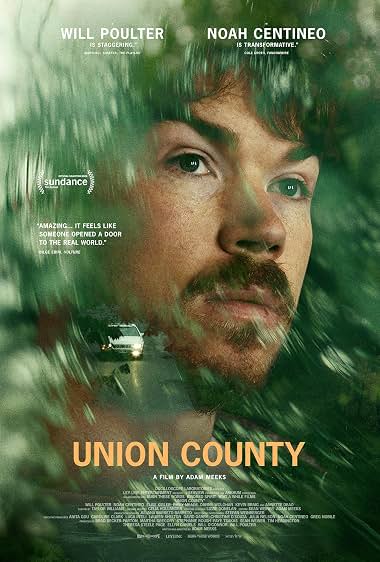
Union County (2026) Finds Truth in Recovery’s Daily Struggle, Not in Hollywood’s Typical Depiction of It
A Director Returns Home
A quick Google search for Adam Meeks calls him a “Brooklyn-based filmmaker and video producer.” But Meeks was actually born in Union County, Ohio—a rural town hit hard by the opioid epidemic. In his latest film, Union County (2026), Will Poulter and Noah Centineo play siblings Cody and Jack Parsons. The brothers struggle through a court-mandated drug rehabilitation program in their hometown.
Dismantling Addiction Movie Tropes
Union County refuses to follow the sensationalized path of most addiction movies. Meeks abandons tired tropes and, as a result, creates a film likely to be a major force in the 2026–2027 awards season. Poulter transforms so completely that, if you didn’t know he was British, you’d believe he grew up in Ohio. His portrayal of Cody is a standout, awards-worthy performance.
Authenticity from the Ground Up
I was born in New York City and grew up between here and the Midwest. I also visited family in Ohio often. I’ve seen the reality of addiction in these Rust Belt communities and their East Coast, post-industrial counterparts. Meeks grounds his film in authenticity. He shot on location in Bellefontaine, a real town in Logan County, Ohio. More importantly, Meeks involved actual participants from the 2025 Adult Recovery Court. Their daily challenges and small triumphs bring rare realism to the screen. Poulter and the cast, working alongside these individuals, deliver a masterclass in neorealism.
Recovery Without Hollywood Endings
This film avoids explosive overdoses or triumphant rehab scenes. Unlike typical addiction movies, Union County doesn’t treat sobriety as a grand victory. Instead, it lingers on what’s left behind—the pain, the anger, and the slow, everyday grind of rebuilding. It shows the long, hard journey of earning back trust, both from others and from oneself.
Breaking Stigma Through Story
Meeks’s inspiration began in 2017, when a local judge invited him to a recovery court meeting. “I wanted to capture the feeling in that room because I felt like it could do a lot to upend the stigmas, clichés and expectations around addiction and recovery,” Meeks told Cleveland.com.
There’s a moment in the film when Cody confides to his group that his mother called him “Hurricane.” He realizes he introduced his younger brother to drugs. Emily Meade, playing their estranged sister Katrina, communicates years of pain mostly through silence. Her door was open to Cody until he stole from her.
We’re looking at non-professional actors—real people. In both meetings and in the courtroom, they’re sharing their highs and lows—their successes and setbacks, their hopes and fears—with striking sincerity and a gratifying sense of gratefulness for the support of their peers. Neorealism.
It started with Italian filmmakers after World War II. It uses on-location shooting, natural lighting, documentary-style shots, and non-professional actors instead of glossy Hollywood studios. Union County succeeded in bringing this art into 2026 and telling the story of devastation through those who actually lived it.
Speaking Volumes with Silence
Poulter barely speaks in many scenes. In fact, he didn’t even smile until 90 minutes in. Instead, the film relies on the quiet moments. We look at his character and wonder what’s going on in his head. Loved ones saw someone once cold and detached. For the addict, it’s not a lack of care—it’s the brain, hijacked by addiction. Sober now, Cody must face the consequences of destruction that he barely remembers.
The Cadillac as Metaphor
A central metaphor in Union County is Cody’s effort to repair his crashed Cadillac. Early in the film, Cody and Jack wreck the car during a relapse. The damaged vehicle mirrors Cody’s life—wrecked by addiction, in need of repair. Fixing it becomes his way of taking responsibility. As he works on the car, Cody opens up, especially to Anna (Elise Kibler), a recovering addict across the street. Both realize romance must wait. Recovery comes first.
Being able to control the impulse of human connection and shared lives is a huge step. Communicating that is an even bigger one. Meeks intentionally avoids glamorous Hollywood, storybook tropes, making the mundane act of fixing a vehicle one of the most honest, poignant reflections of what fighting for a second chance actually looks like.
The Verdict
Director Adam Meeks, cinematographer Stefan Weinberger, and editor Sean Weiner have created a film of rare honesty. Union County strips away sensationalism and reveals the human side of the opioid crisis. With true cinematic restraint, they’ve captured what’s beneath the statistics. It’s real people trapped in its throes and desperately trying to find peace in every sense. Celia Hollander soundtracks this raw, ambient quiet anxiety surging throughout Union County (2026).
This is an honest, compassionate drama that honors its real-life subjects. Will Poulter and Noah Centineo deliver raw, deeply felt performances. Real recovery program participants blend into the cast, heightening the realism. The film captures the fragile, non-linear process of addiction and accountability. Stark, beautiful, and profoundly moving, Union County is a triumph of social realism—one of the year’s essential films.