Binge-Worthy by Design
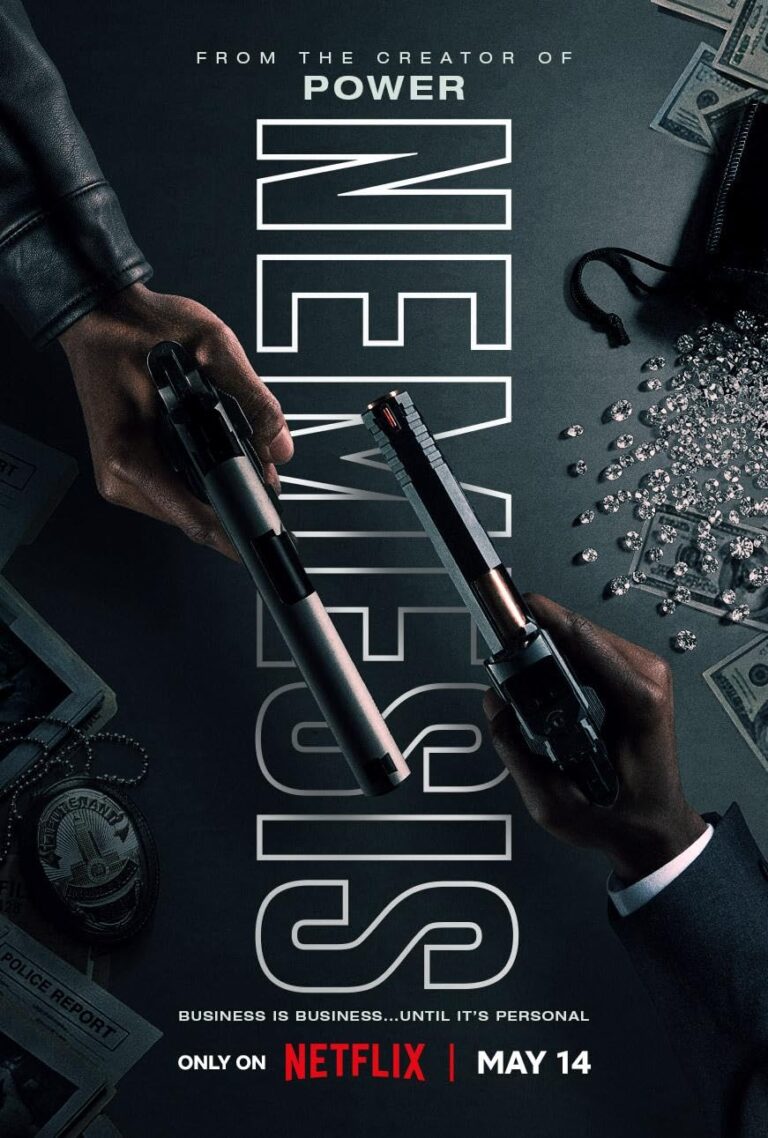
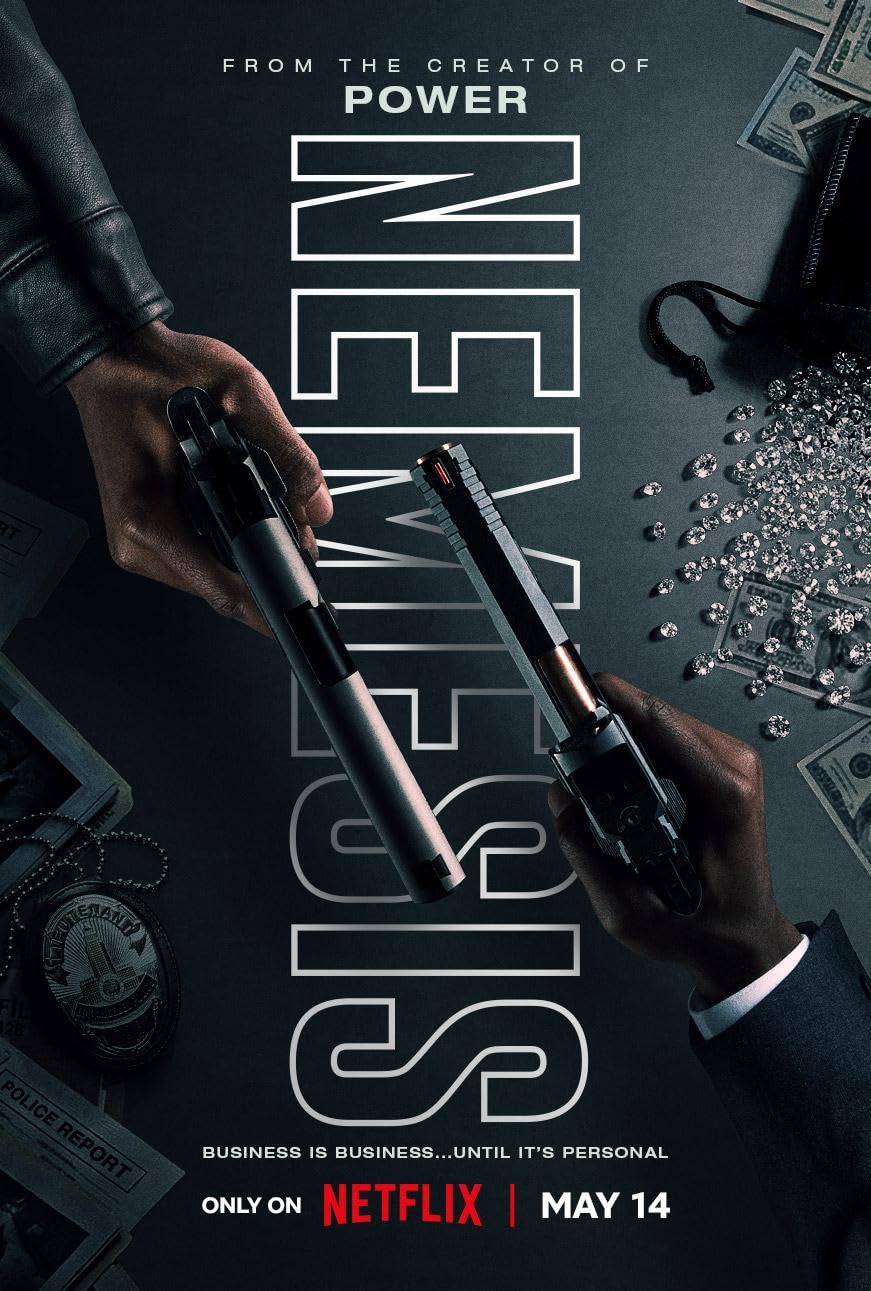
Netflix’s original series are made for binge-watching. The streaming service targets digitally native generations—people who want control, instant access, and niche content instead of traditional TV schedules. Nemesis, co-created by Courtney A. Kemp and Tani Marole, feels like Kemp’s Starz hit series Power, but it’s engineered for Netflix. Instead of drug dealers as the focal point of violence, Nemesis pays clear homage to classic 1990s cat-and-mouse heist films. The influence of Michael Mann’s Heat is especially strong.
A Duel at the Center
Y’lan Noel stars as master thief Coltrane Wilder. He’s locked in a tense cat-and-mouse game with LA detective Isaiah Stiles, played by Matthew Law. Like Heat, Nemesis is a psychological thriller. It explores the motivations that propel, the convictions that uphold, and the obsessions that unravel its characters.
Style, Substance, and Homage
All of this unfolds in signature Kemp style. Impeccably dressed, beautiful people navigate high-stakes betrayal against a backdrop of luxury and lethal ambition. Mario Van Peebles, who directed the very first episode, gives a head nod in the opening sequence to his 1991 urban film classic New Jack City. For the trained eye, there’s also a distinct Antoine Fuqua-like Training Day flair in some exterior scenes. You’ll spot aerial shots and quick cuts through alleys as the camera races the gritty underbelly of Los Angeles. Rather than rely on labels like “glossy crime melodrama” or “prestige street soap,” let’s call Kemp’s style what it truly is: hyper-stylish, soap-opera-infused action that’s unapologetically Black.
Magnetic Opposites
The linchpin of Nemesis is the magnetic opposites-attract dynamic between Noel and Law. Noel brings effortless, cool-headed gravitas to Coltrane Wilder. He’s a compelling anti-hero who commands respect through unwavering loyalty to his crew. Law counterbalances this with raw, obsessive persistence. He captures the desperation of a man watching his life unravel. Their shared scenes evoke a tense, humming force between two opposites determined to collide. You can’t look away.
Women with Narrative Weight
Beyond this central duo, Nemesis gives its female cast significant narrative weight. These performances ground the story when the heist elements veer into over-the-top, masculine theatrics. Dr. Candice Stiles, played by Gabrielle Dennis, is Isaiah’s wife and a high-end therapist. Dennis delivers a nuanced performance. She highlights the quiet isolation of a spouse forced to take a backseat to her husband’s obsessive career. She also struggles to maintain stability for their son, Noah (Cedric Joe), amid intense family pressures. Cleopatra Coleman plays Ebony Wilder, Coltrane’s wife and criminal accomplice. Coleman portrays a calculating, fiercely protective partner who refuses to sit on the sidelines as the LAPD closes in. Together, they make motherhood, sisterhood, and friendship feel authentic. All this, while balancing loyalty and survival on screen with remarkable depth and seriousness for an intentionally produced melodrama.
A Nod to The Wire and Crime TV Nostalgia
For fans of prestige crime dramas, the later episodes offer a delightful surprise. There’s an unofficial on-screen reunion of The Wire alumni. Late-season additions include Chris Bauer as a prickly senior official, Domenick Lombardozzi as a hard-nosed detective, and Michael Potts as Isaiah’s irate, old-school Black captain—a classic trope. These performances inject a welcome dose of police procedural nostalgia. Potts is a standout. He unleashes colorful, expletive-laden tirades about departmental politics and offers brilliant metaphors about the deep trouble the detectives face after a chaotic street shootout. Tre Hale, as “Stro” Stroman—Coltrane’s solid right-hand man—brings this sense of loyalty to the fore. He reinforces what Nemesis is so clearly striving for within its criminal set.
Sharp Dialogue and Meta Commentary
Maestro Harrell—best known as Randy Wagstaff on The Wire—shares a standout scene with Moe Irvin, who plays Isaiah’s old-school, gang-affiliated father, Amos “Nightmare” Stiles. Their exchange is some of Nemesis’s sharpest writing:
“Y’all ain’t gangsters. Y’all content creators. Running around… posting videos, bunch of insta-people, whoring yourself out for likes. Y’all too focused on the wrong shit.”
Harrell, brilliantly named “B-Roll,” tries to double-cross Nightmare but ends up outmaneuvered. This scene operates as a biting meta-commentary on modern, digital-driven ambition—a fatal flaw in the world Nemesis inhabits. B-Roll’s generational worldview is so consumed by the performance of gangsterism for online validation that he completely underestimates the real threat standing right in front of him. The writers make it clear: in the high-stakes criminal underworld, obsession with clout makes you weak, predictable, and ultimately an easy target for both rivals and law enforcement.
By having the seasoned, streetwise Amos outsmart and eliminate the know-it-all, shortcut-taking, approximation-making B-Roll, Nemesis delivers a harsh critique of the younger generation’s superficial priorities. True danger, the show insists, doesn’t announce itself for likes. Clout or algorithms are meaningless in the face of the originator you’re flatteringly trying to imitate, yet rob, at the same time. I wasn’t expecting that level of depth from this series, but it’s a testament to just how sharp its writing can be.
Misssteps, Quips, and Missed Opportunities
But Nemesis isn’t without missteps in its narrative structure, or its fair share of clunky dialogue. Its unapologetically Black sheen really starts to matte when the language becomes overly expositional. In one notable example, when a character warns Coltrane that he is playing with fire, he flatly responds, “I am Prometheus. I bring the fire.” Somewhere, Zeus and a public high school English teacher are both staring at Coltrane, lips twisted—“Oh, you bring the fire, is that right?” Toni Morrison, in her day, mastered the art of ignoring the white gaze. She allowed the world to see Black characters confident in their own intelligence. Aleshea Harris’s film Is God Is (2026), is an on-screen example of this done right. Coltrane, by contrast, seemed uncomfortable with the quip of Western antiquity.
Another scene features a thief uttering, “Call me Sydney Sweeney, because these bitches are all-natural.” Okay, fam—you got it. There are also moments when Matthew Law’s Pacific Northwest upbringing makes it hard to buy his LA homegrown grit or do-or-die conviction. Sometimes, I just don’t buy it. Meanwhile, Candace Stiles and Ebony Wilder are too often relegated to the roles of long-suffering domestic partners. They’re left looking stressed or confused at home while their husbands play dangerous games with gunplay and explosives. It’s a missed opportunity—an expensive Black therapist from a strong Black family, and a Black female, Thomas Crown Affair-level master thief, at times reduced to ornamental wish fulfillment.
When the Budget Kicks In
However, just when you think you’ve had your fill of rote, off-key one-liners and the maudlin helplessness written for Nemesis’s women, the budget kicks in. The music department curates an impressive blend of contemporary hip-hop and R&B. This keeps the energy high even when the plot stumbles. Cleveland rapper Doe Boy’s “3AM IN LA” finds a new wave of listeners here, alongside classics from Aretha Franklin, Prince, Earth, Wind & Fire, and The Clipse featuring Nas.
Grammy-winning collective 1500 or Nothin’, led by Larrance Dopson (Rance) and singer-songwriter James Fauntleroy, makes its television scoring debut with a complete original soundtrack for Nemesis. Among the standout tracks is “Prometheus”—and yes, it brings the fire.
A Cinematic Love Letter to LA
Visually, the series is top-tier. Netflix’s multi-million dollar investment is clear in every frame. Shot entirely in high-definition 16:9, the series delivers a vibrant, glossy, sun-drenched portrait of modern Los Angeles. Veteran director Mario Van Peebles helms the first two episodes. He establishes a cinematic, neo-noir atmosphere that makes the series feel like one continuous feature film. He trades generic studio backlots for on-location street-level shots. Sweeping overhead views of traffic jams and sun-bleached concrete abound.
It Isn’t Perfect, But it’s a Stylish Binge
Nemesis doesn’t reinvent the wheel, nor does it achieve the gritty realism of the classic Heat—and it’s not supposed to. It’s predictable, overstuffed, and proudly melodramatic. It’s a B-movie spectacle stretched across an eight-hour canvas. Its exceptional lead performances, slick presentation, and genuine love for old-school crime cinema elevate it. The sheer charisma of its cast and crew, paired with frantic energy, delivers an explosive thriller. It is an undeniably entertaining binge.
A Cliffhanger Ending
The season ends with a wild, high-stakes cliffhanger in Episode 8, “Zugzwang.” The fates of the Stiles and Wilder families hang in the balance. I’m almost certain Netflix will renew Nemesis for a second season, even with insider talk of Courtney A. Kemp stepping down as showrunner. But that happens all the time. I’ll still return to this chaotic, stylized world to watch this psychological chess match reach its bloody conclusion.